Day 7 - An AI Assisted 10 Day Tour in New South Wales Australia

We started the day with another visit to the lookout in Katoomba for the “3 Sisters”. The weather had cleared and the sun was shining so we hoped to get a view out over the valley. Still some low cloud in the valley, but we did see the 3 Sisters so all good! As a hiking and nature hub, Katoomba is ideal and I highly recommend this area if you love nature and want to see the beauty of the Blue Mountains. Lots to do for all levels of fitness and experience.
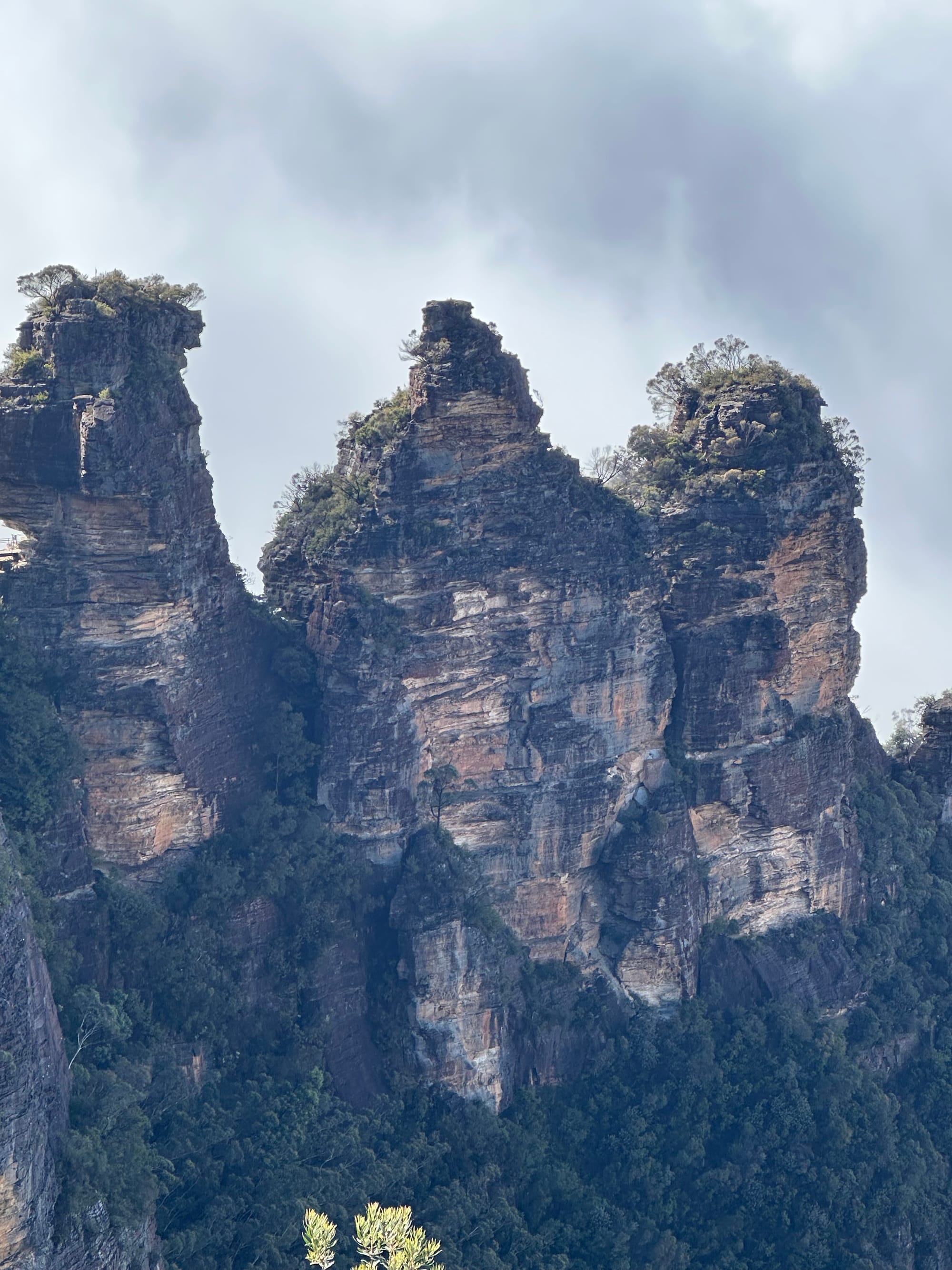
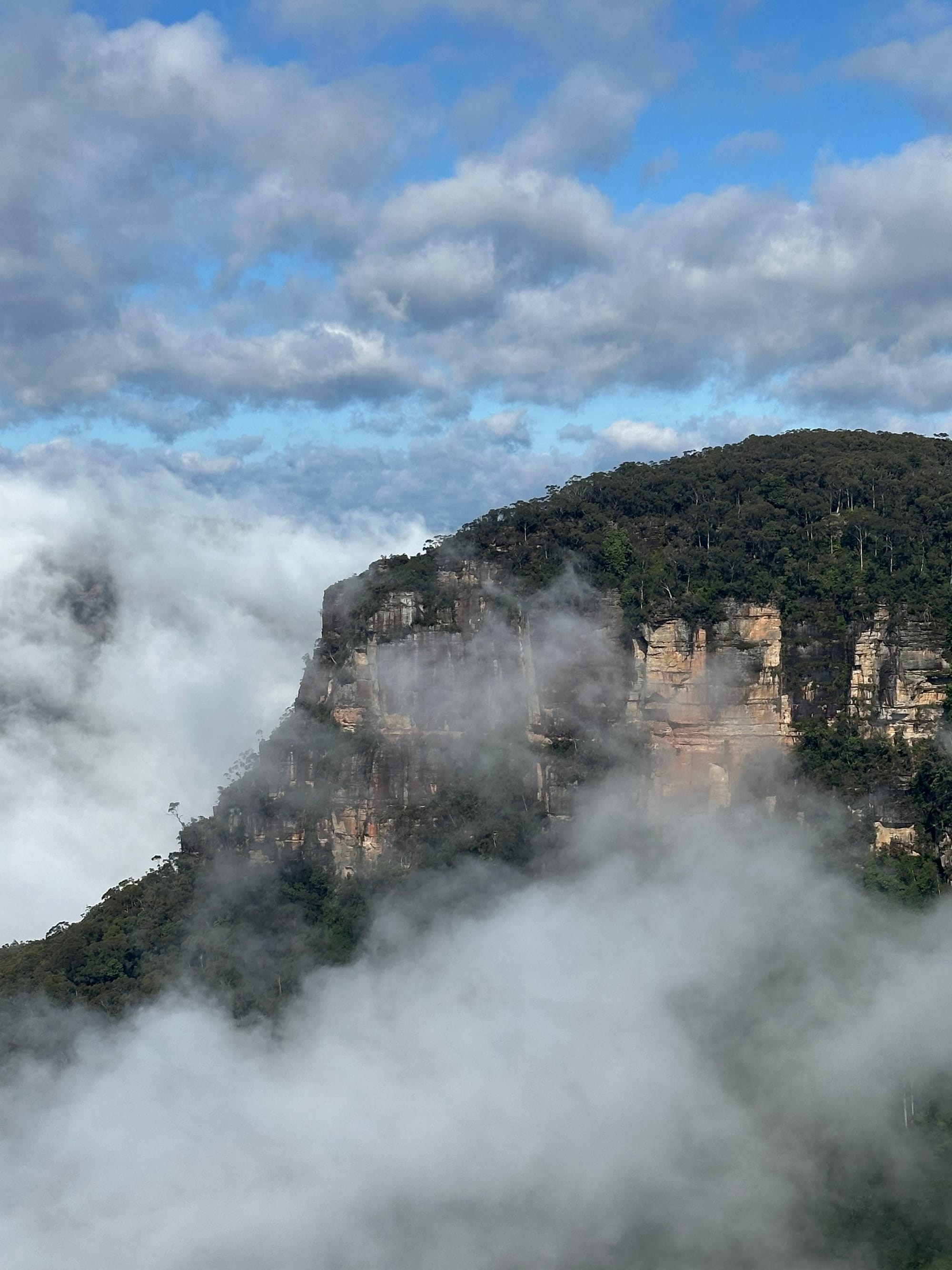
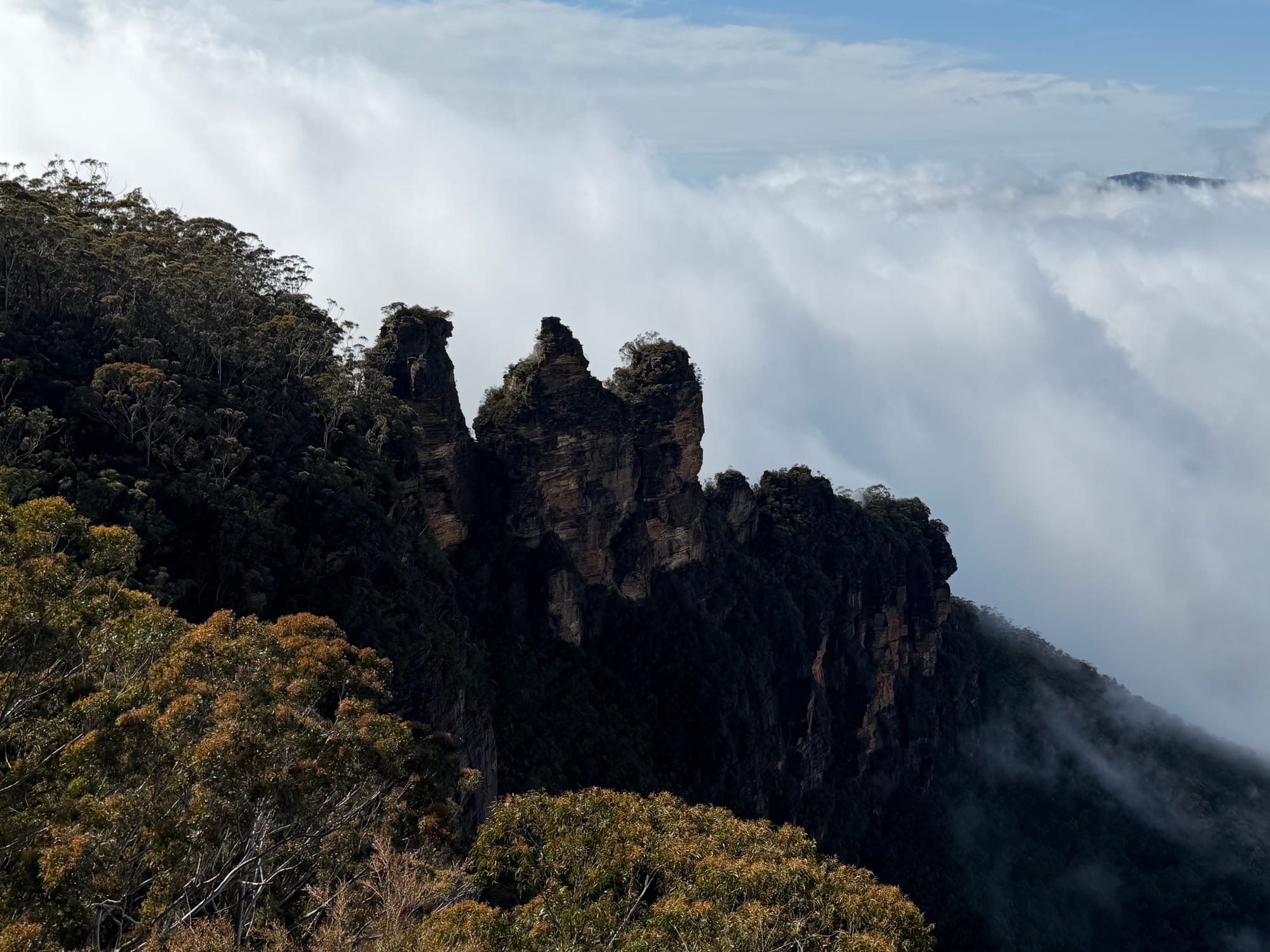
The 3 Sisters and the View Across the Valley
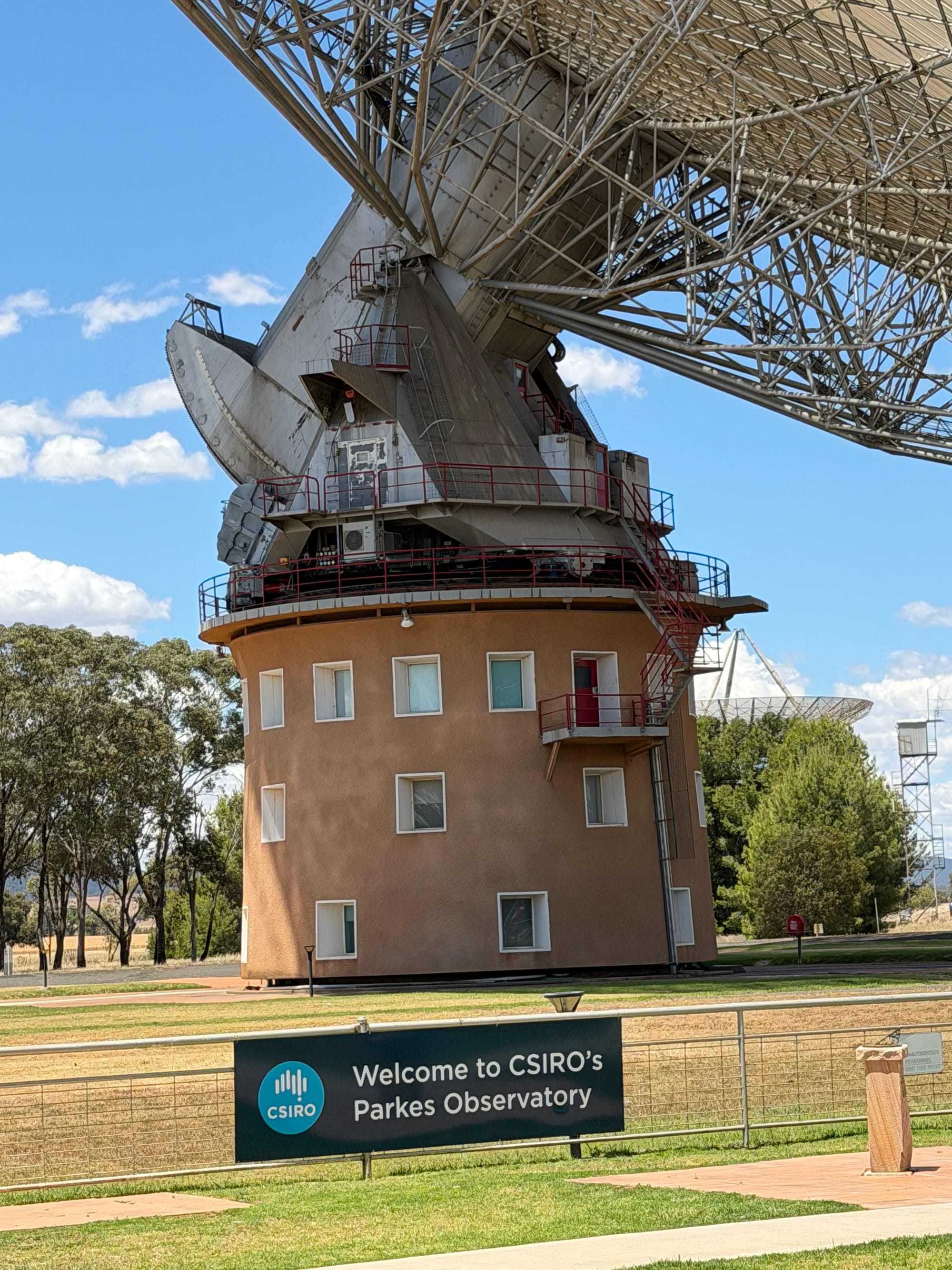
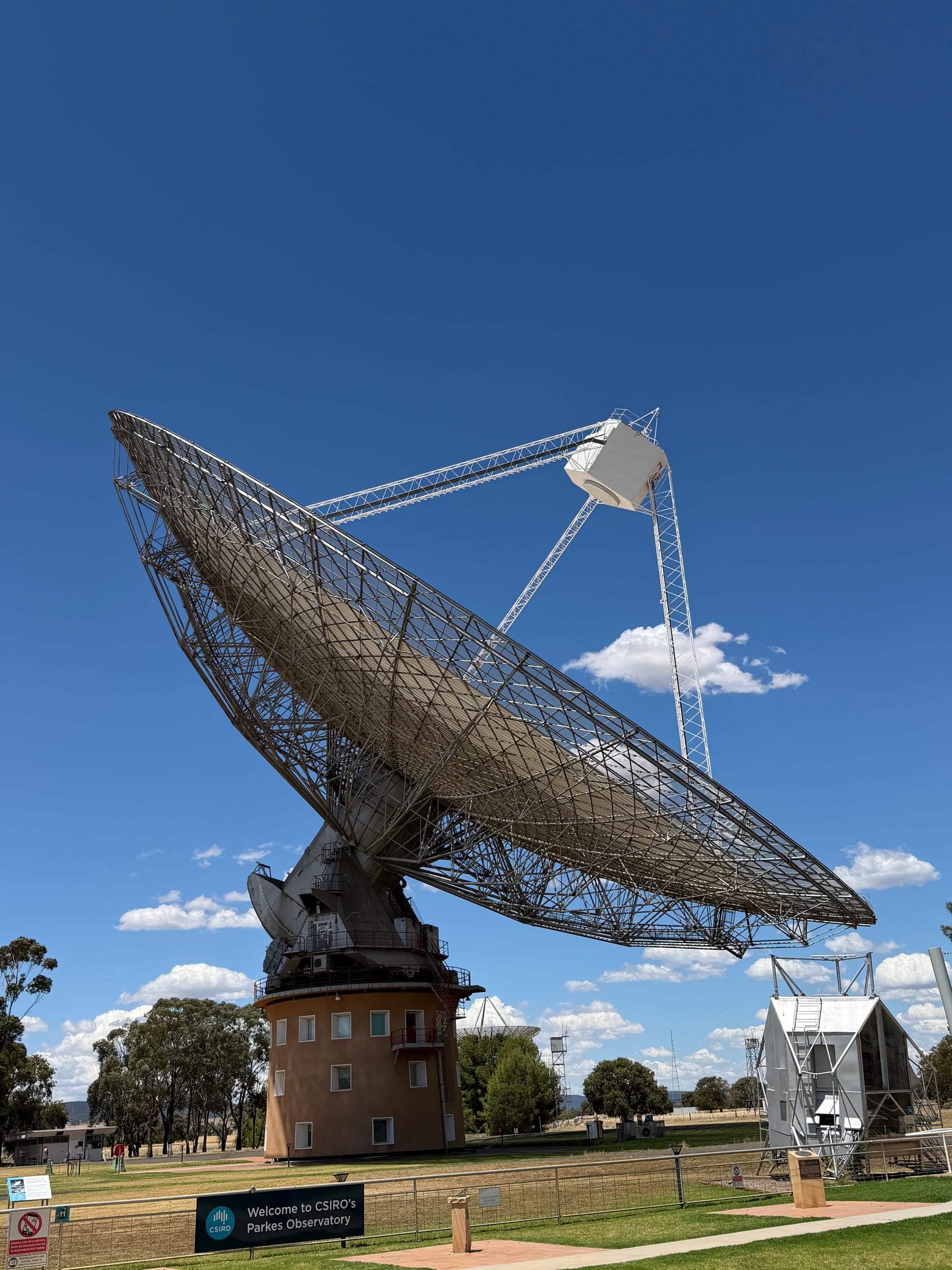
We headed out for the trip up to Dubbo. The main stop along the way was to see the Parks Observatory, the 64 meter radio telescope that has played a key role in our understanding of the cosmos. More on that below. On the way to Parks, we stopped in a small town named Manildra, home to the Manildra Flour Mill. There are a couple of nice murals there we wanted to see.
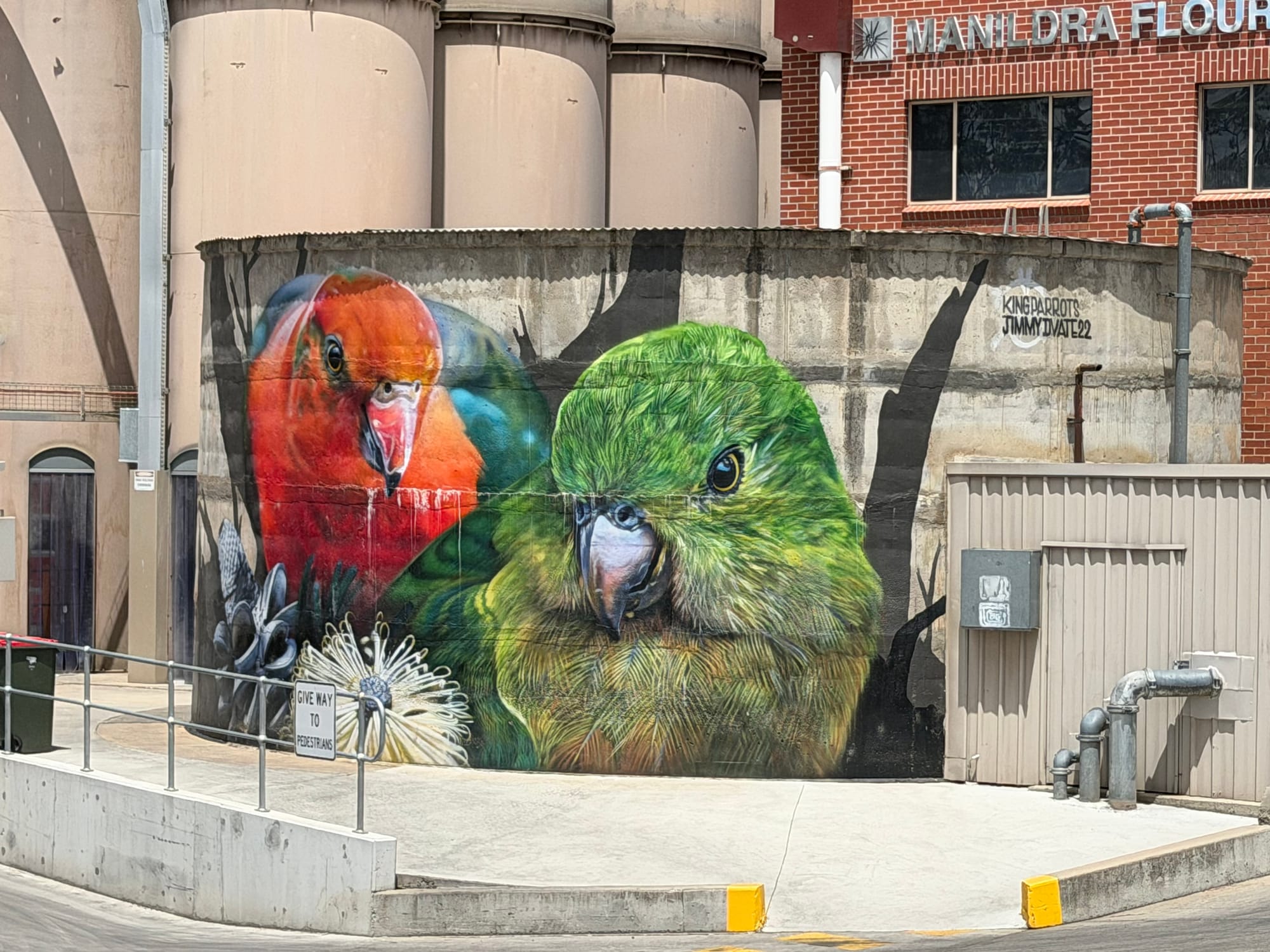
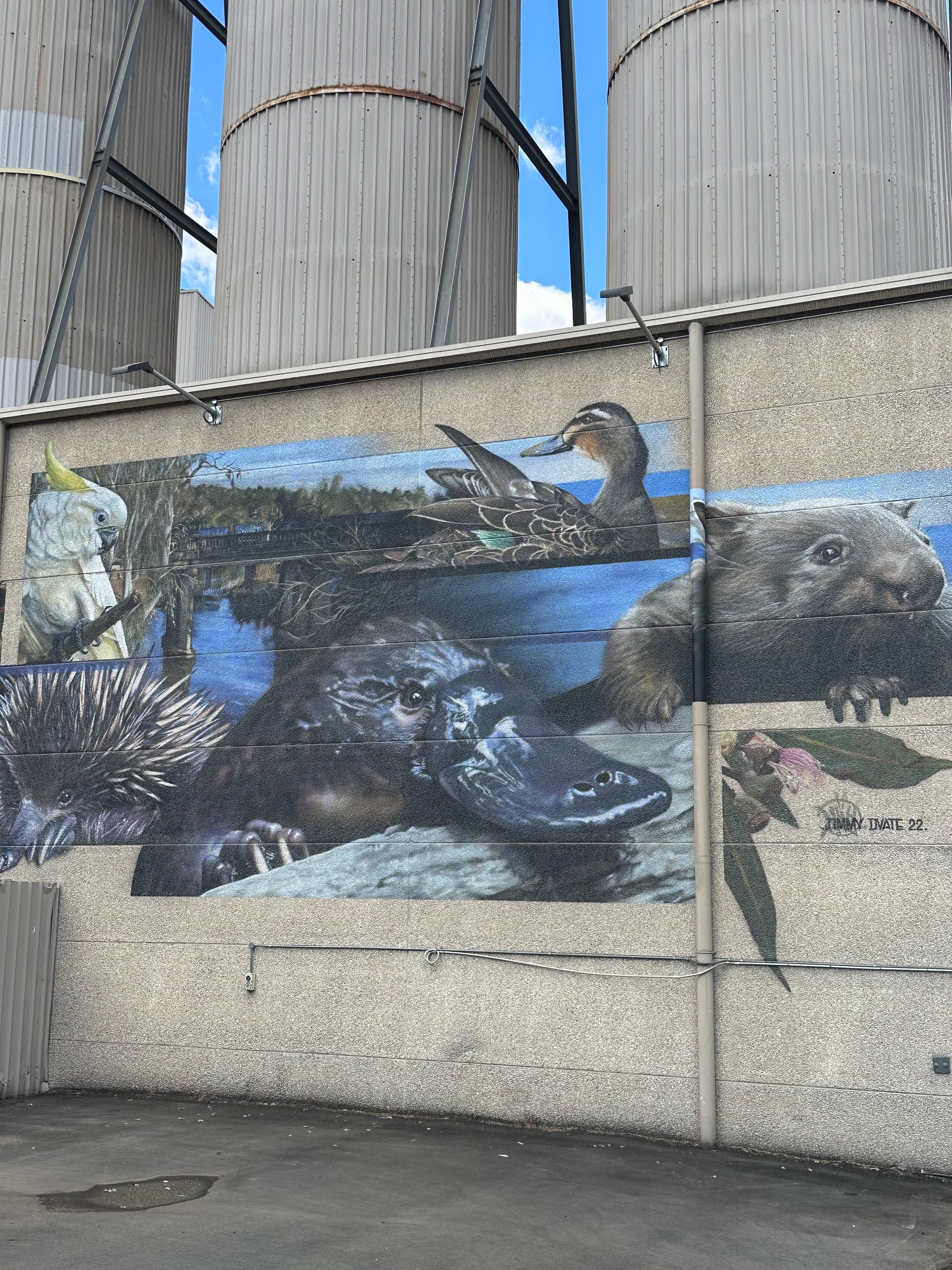
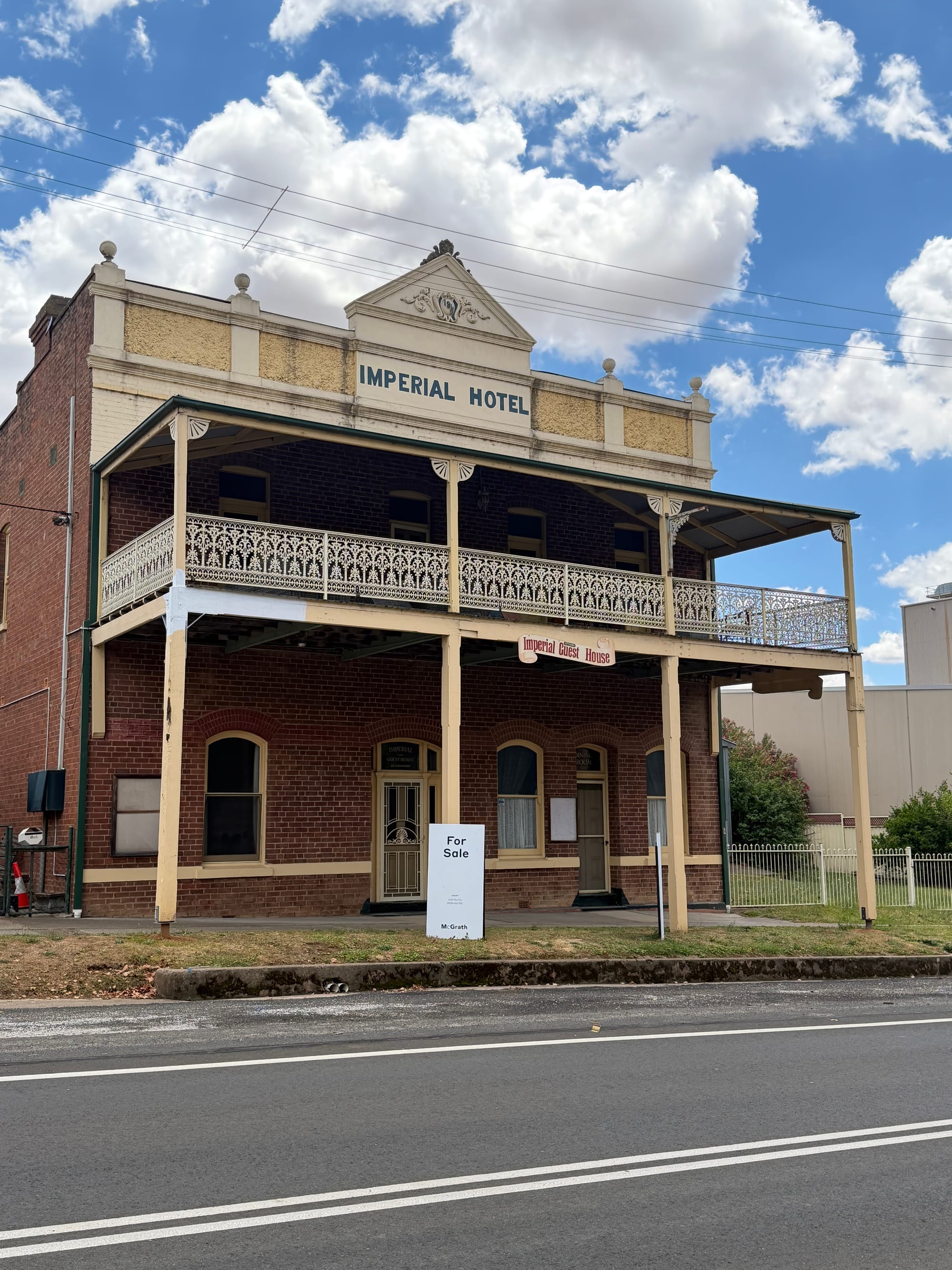
Manildra Silo Art and a real estate opportunity???
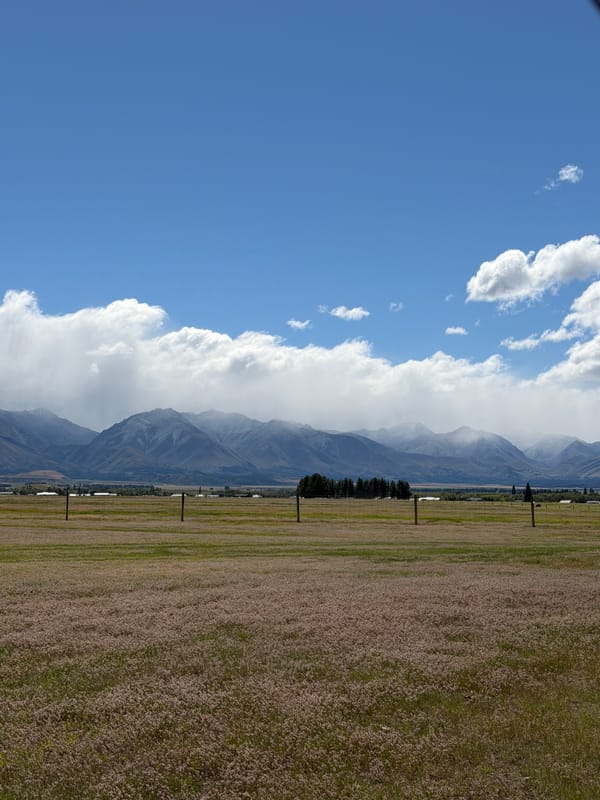
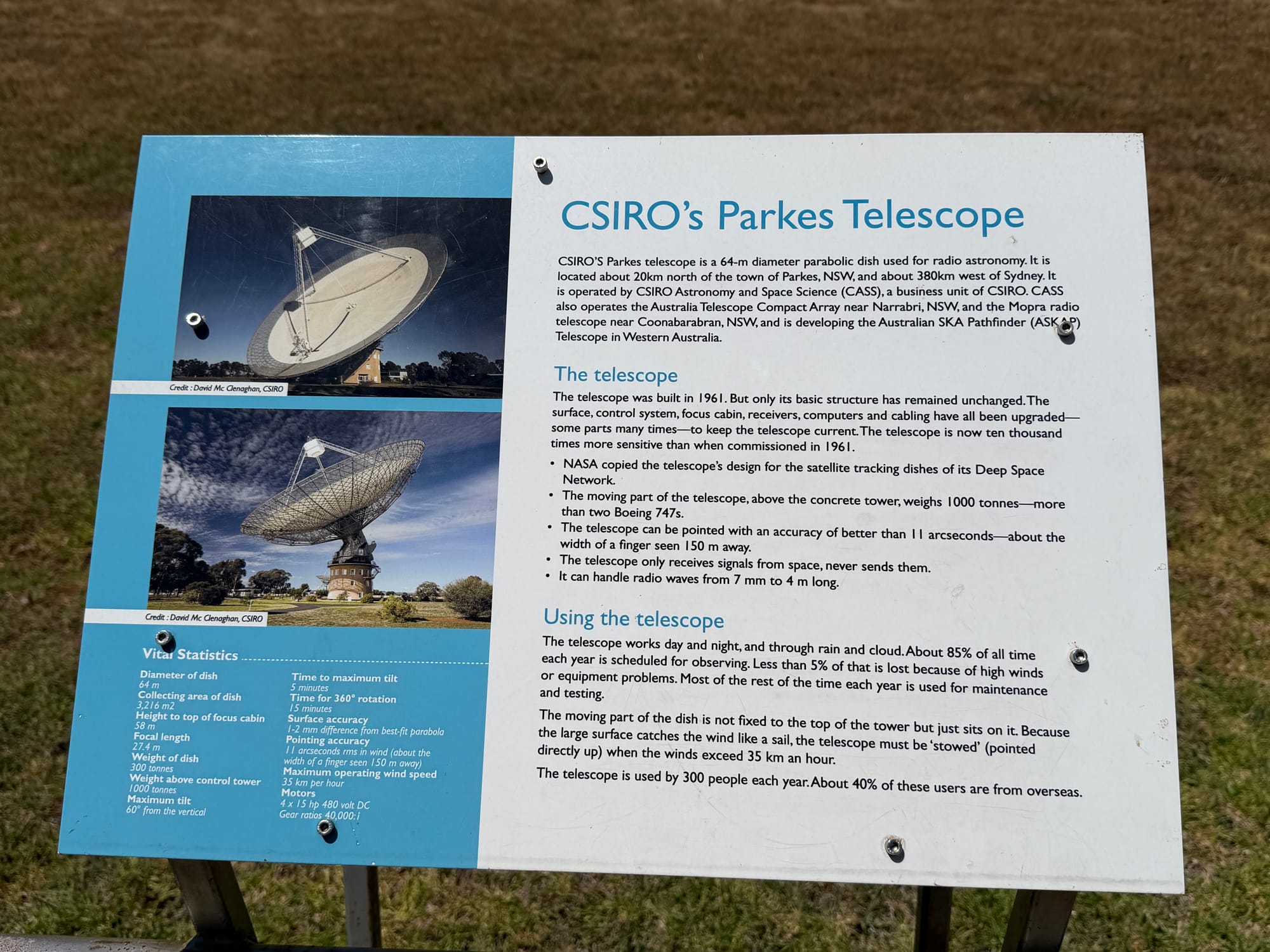
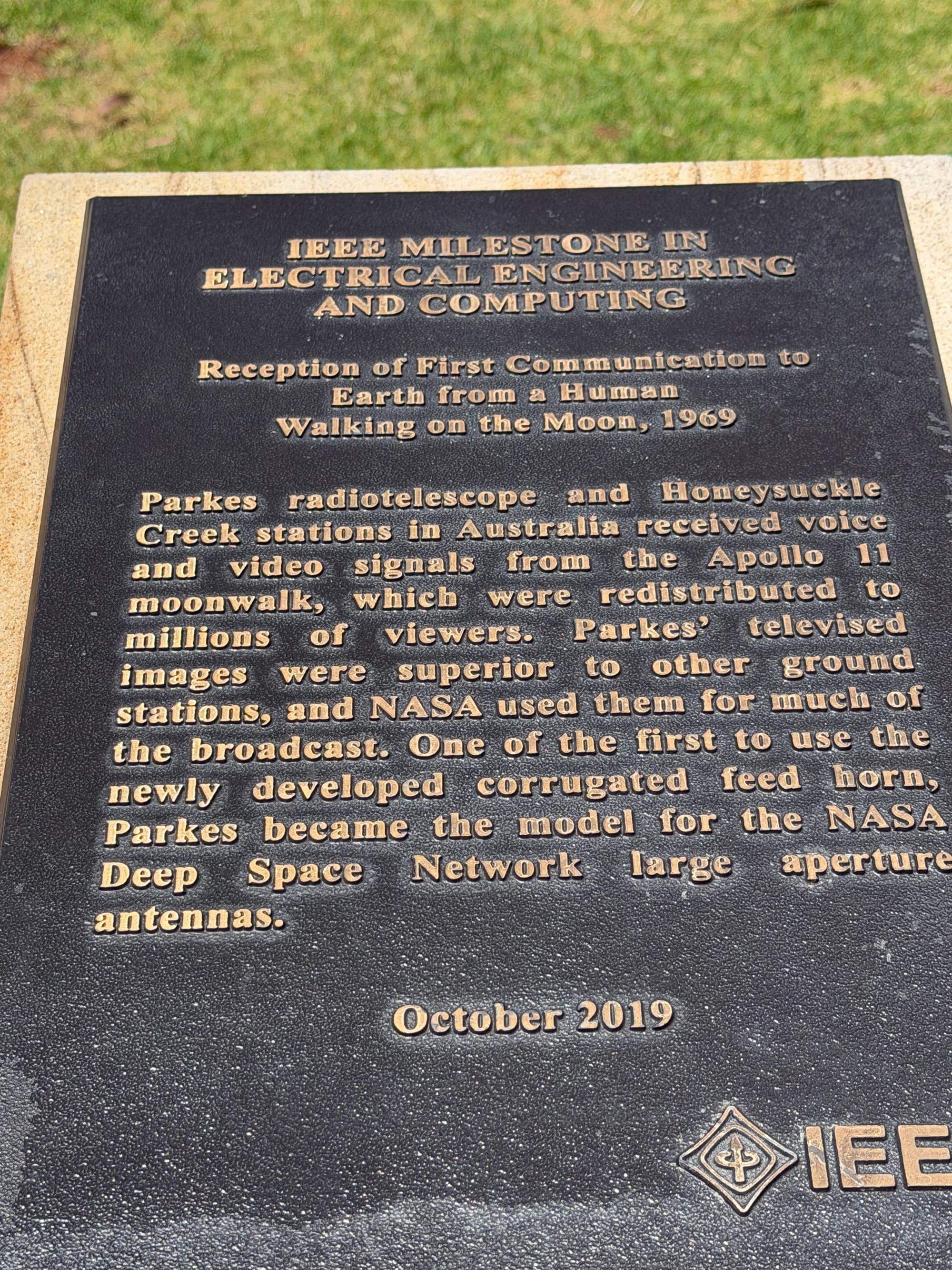
One more brief stop for coffee in Orange, then we were off to Parks. The observatory sits in the middle of flat pastureland, far from any sources of radio or other interference. As we drove through the country side, if reminded me of our drive across the prairies in Canada in 2024. Rolling grasslands, grand views, and livestock. Had to wait briefly along the way as a local farmer moved his cows to a different pasture. Coming around a bend and seeing the 64 meter dish at Parks was quite a site. The visitor centre does an excellent job providing the history of observatory and the ongoing work by scientists from around the world. Construction started on the obervatory in 1959 and was completed in 1961. In 1969, Parks received the first radio signals from he Apollo 11 lunar landing. They pioneered the search for pulsars and have found and mapped more pulsars than any other facility. With constant upgrades, the current receiver is now 10,000 times more sensitive than when it was originally put in service. They continue to map and explore the universe and have embarked on a long term project to look for signs of life elsewhere using a new ultra low band receiver. The scientists and engineers using the facility can do all their work remotely courtesy of a fibre-optic link installed in 2000 connecting Parks to the world. Once remote users receive training on the operation of the telescope, they book time on the system and work remotely. This facility is provided to the global scientific community completely free of charge and is maintained by the Government of Australia.
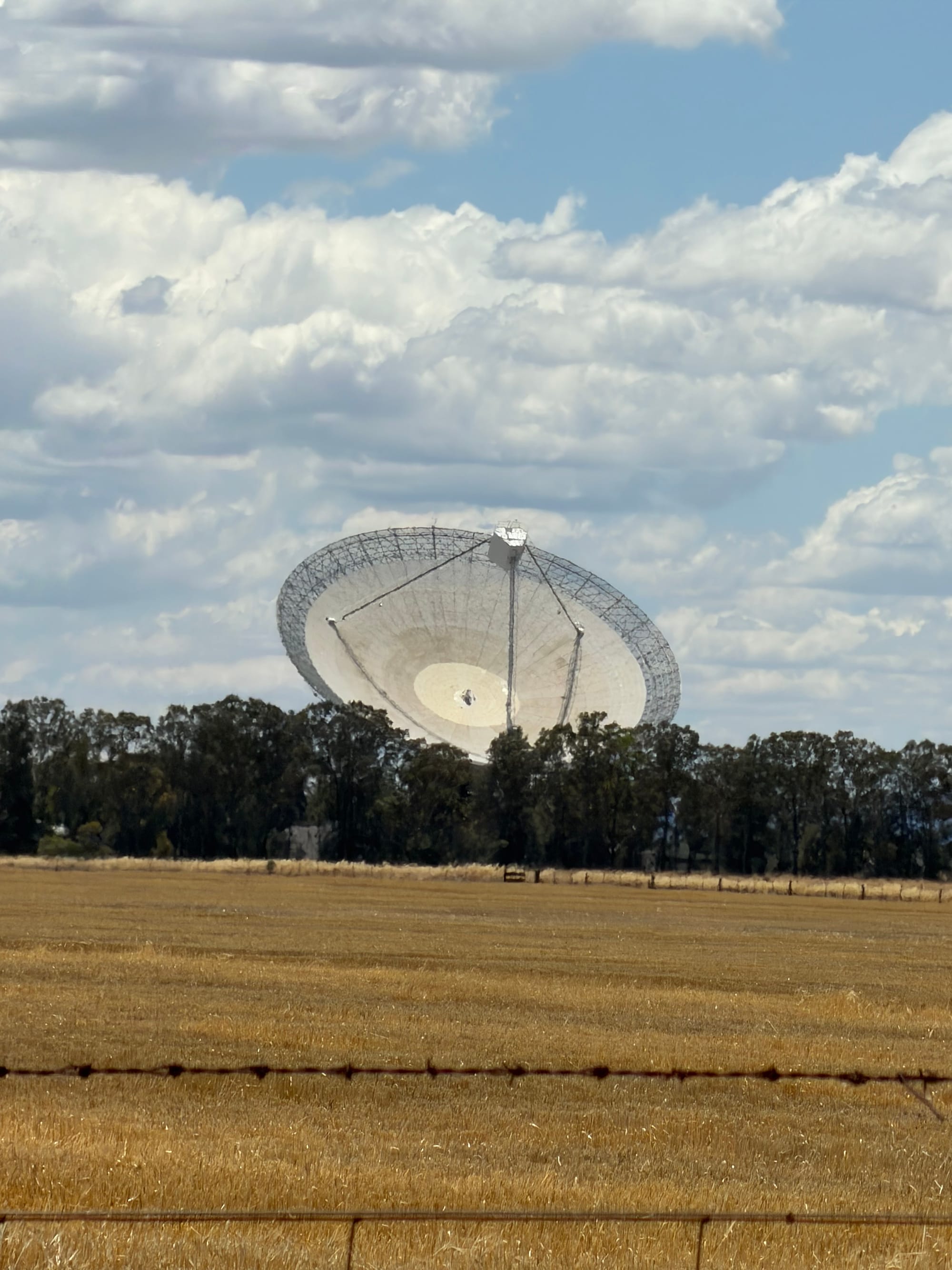
The drive from Parks to Dubbo gave us more of the same prairie-like views all beautiful in their own way. One thing that really did change was the temperature. Temps in Dubbo were around 32C, but its a dry heat. Still hot….
Tomorrow off the Taronga Wildlife sanctuary.