Pancake Rocks, Hokitika Gorge, and a walk on the beach
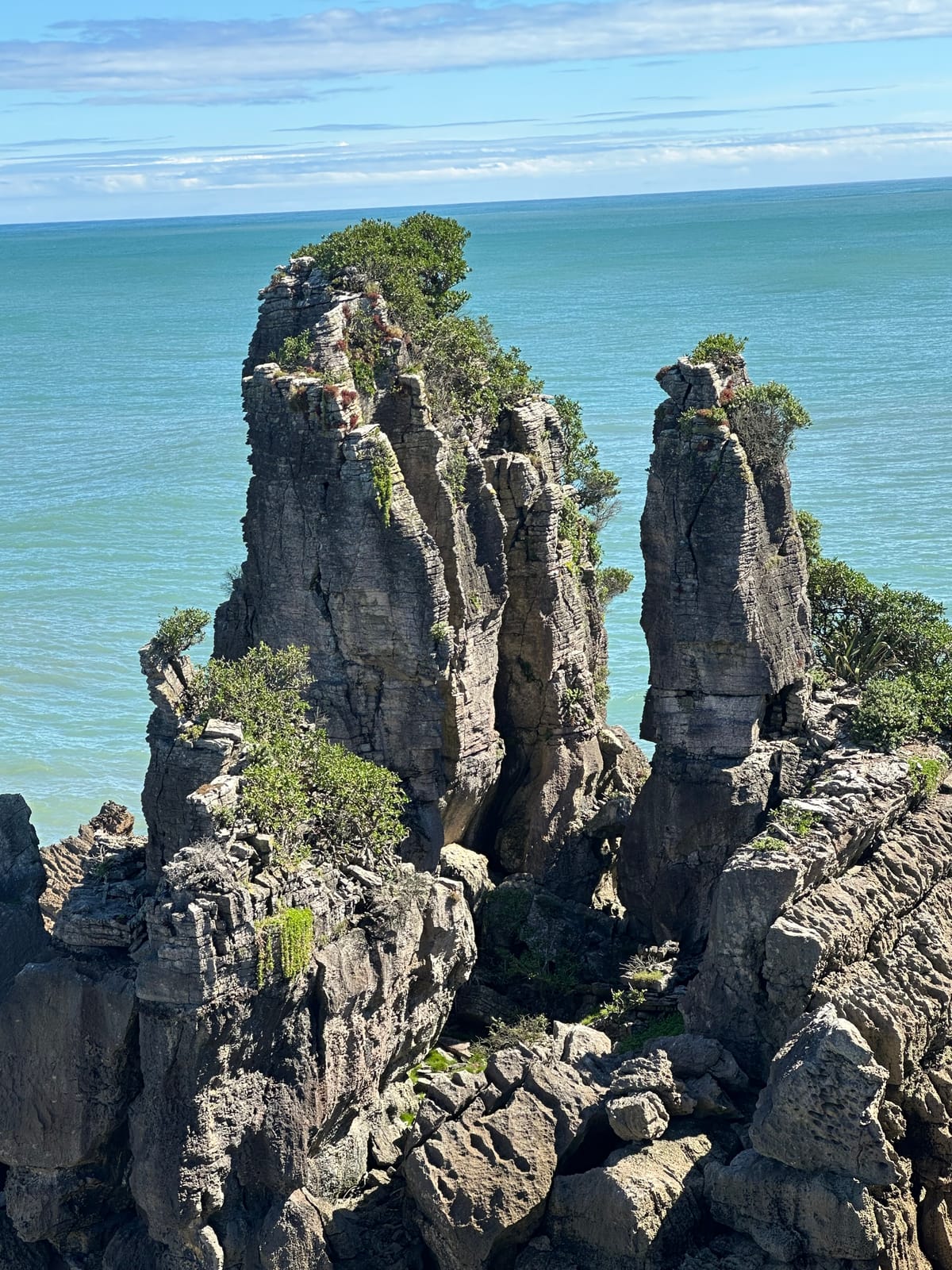
Our AirBnB just outside of Greymouth was perfect for exploring up and down the west coast. We headed up towards Westport on Saturday with a planned stop at the Pancake Rocks in Punakaiki. The rock formations are the result of uplifted limestone and water erosion. At high tide and with a bit of wind, the waves sweep in the narrower passages and there a a few blowholes that the water erupts out of. Not quite enough wind to see the water come up, but we did get a short video with spray coming out of one of the blowholes
Pancake Rock Blowholes in Punakaiki
There’s a cafe/restaurant that specializes in, you guessed it, pancakes. We took a pass on them but they did look good!
From Punakaiki, we headed up the coast to Westport to see the fur seal colony and lighthouse. We had intended to stop there when we were on our way to Greymouth from Picton but ran out of time. It was a beautiful day, and the drive along the Great Coast Road was fun. We’ve driven the stretch of this road between Westport and Greymouth 3 times now, and it’s an adventure!
The walk to the fur seal colony and the lighthouse is along the coast of the Tasman Sea and winds up and down through a bit of bush, through a paddock, and along the coast. Beautiful track and a good walk with enough uphill to make it interesting. All-Trails, describes it as having a steep uphill section followed by an undulating walk along the coast. About a 6 km walk there and back and walking beside the ocean on a stunningly sunny day was spectacular.
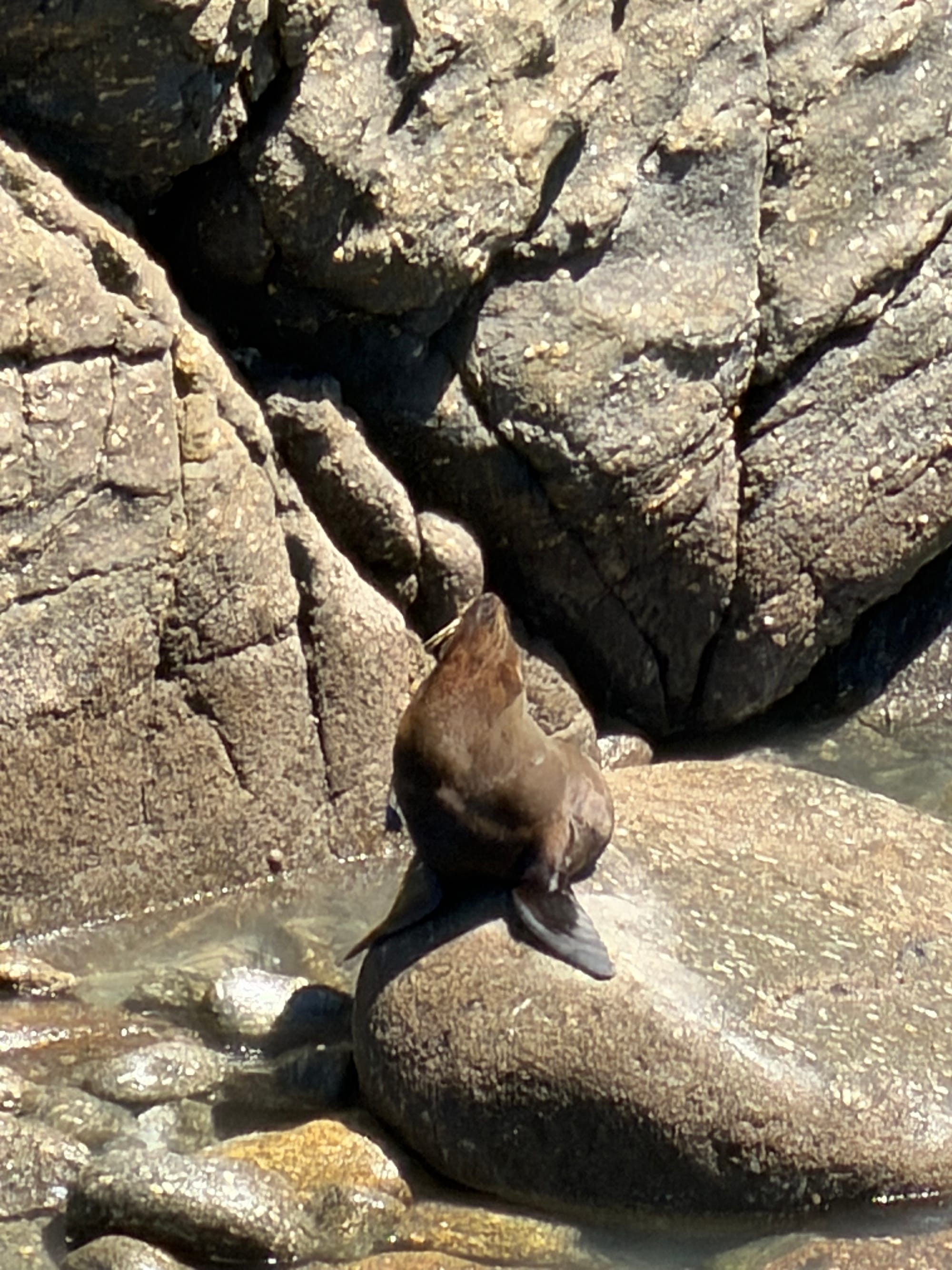
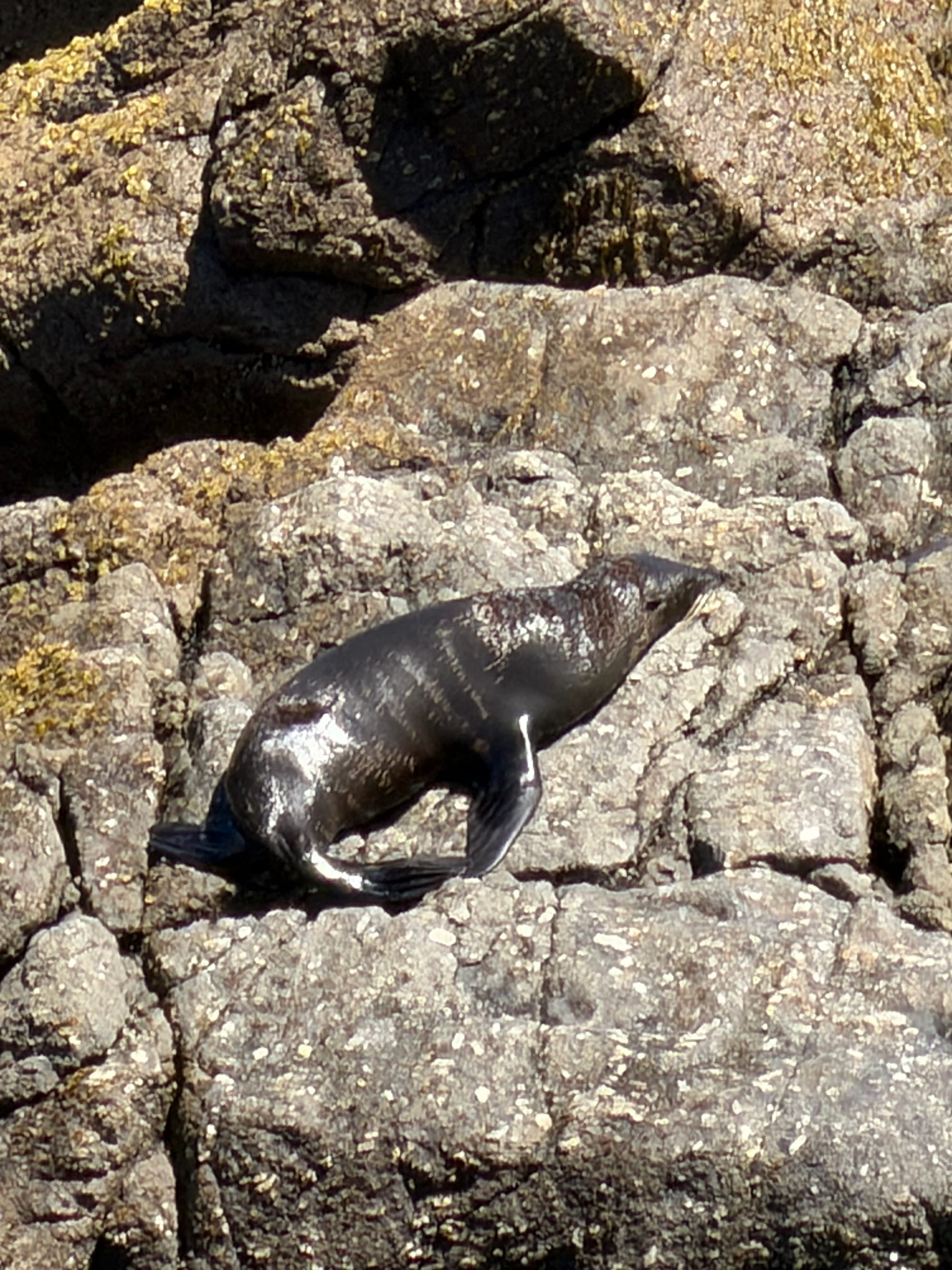
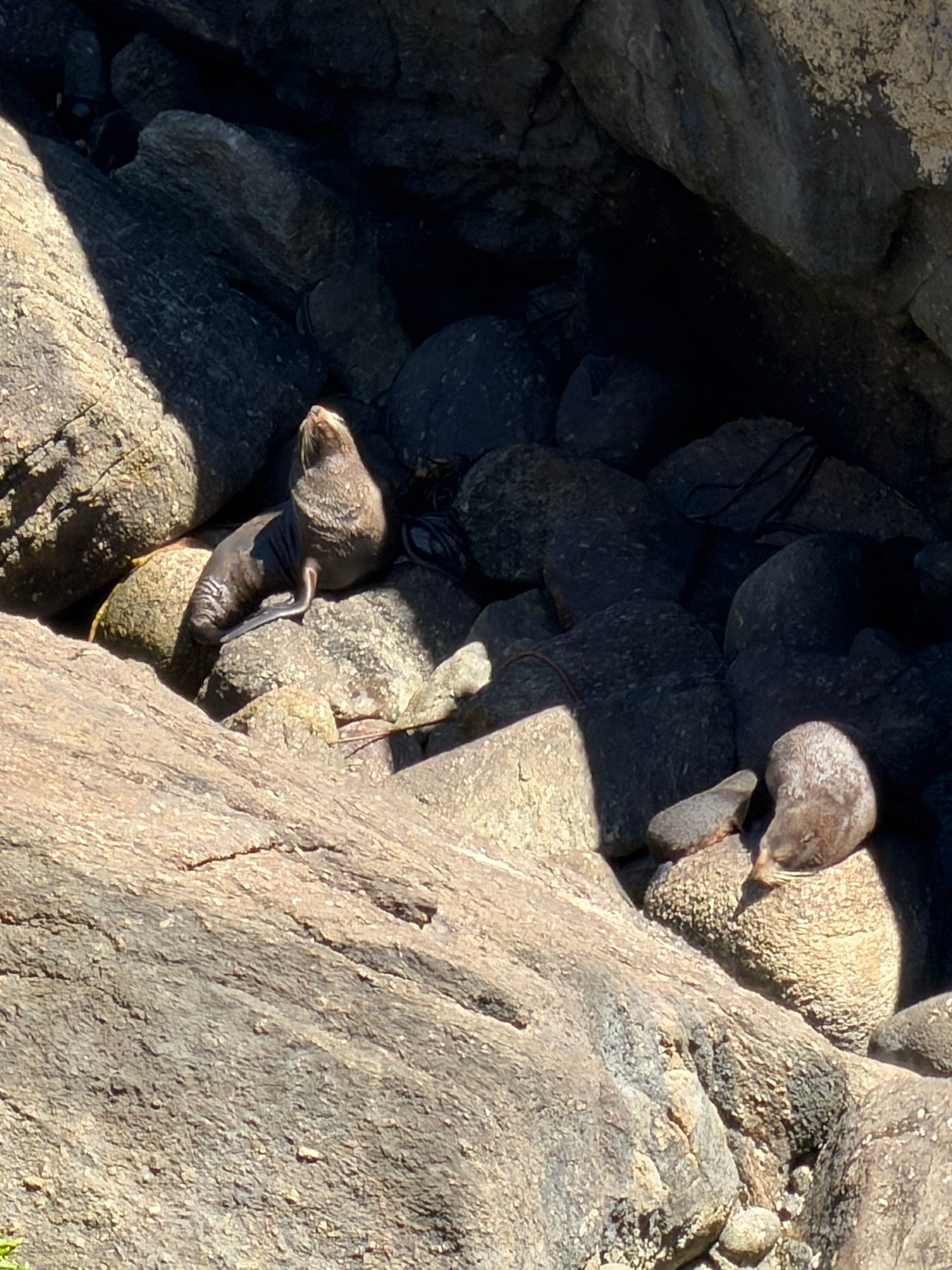
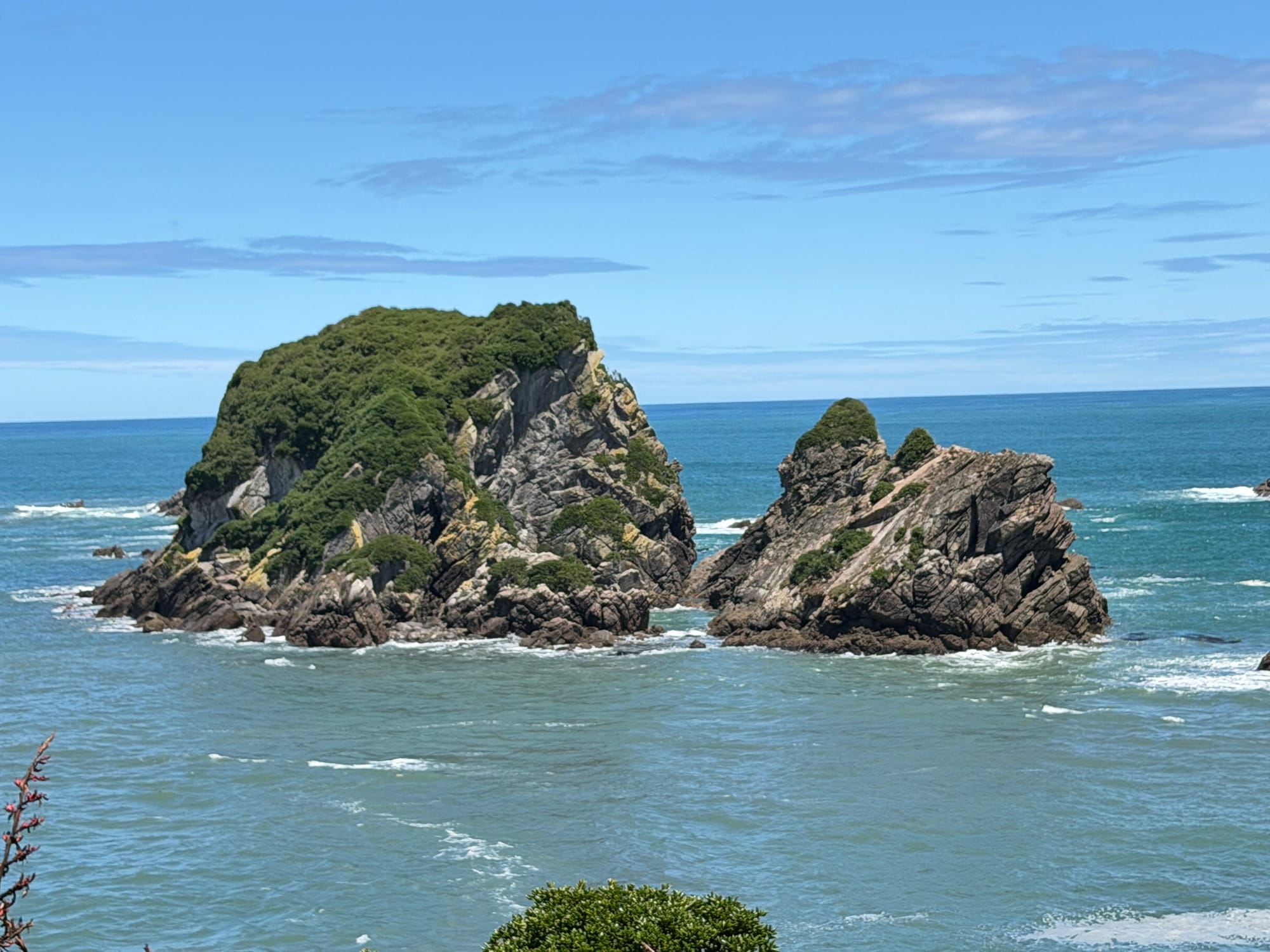
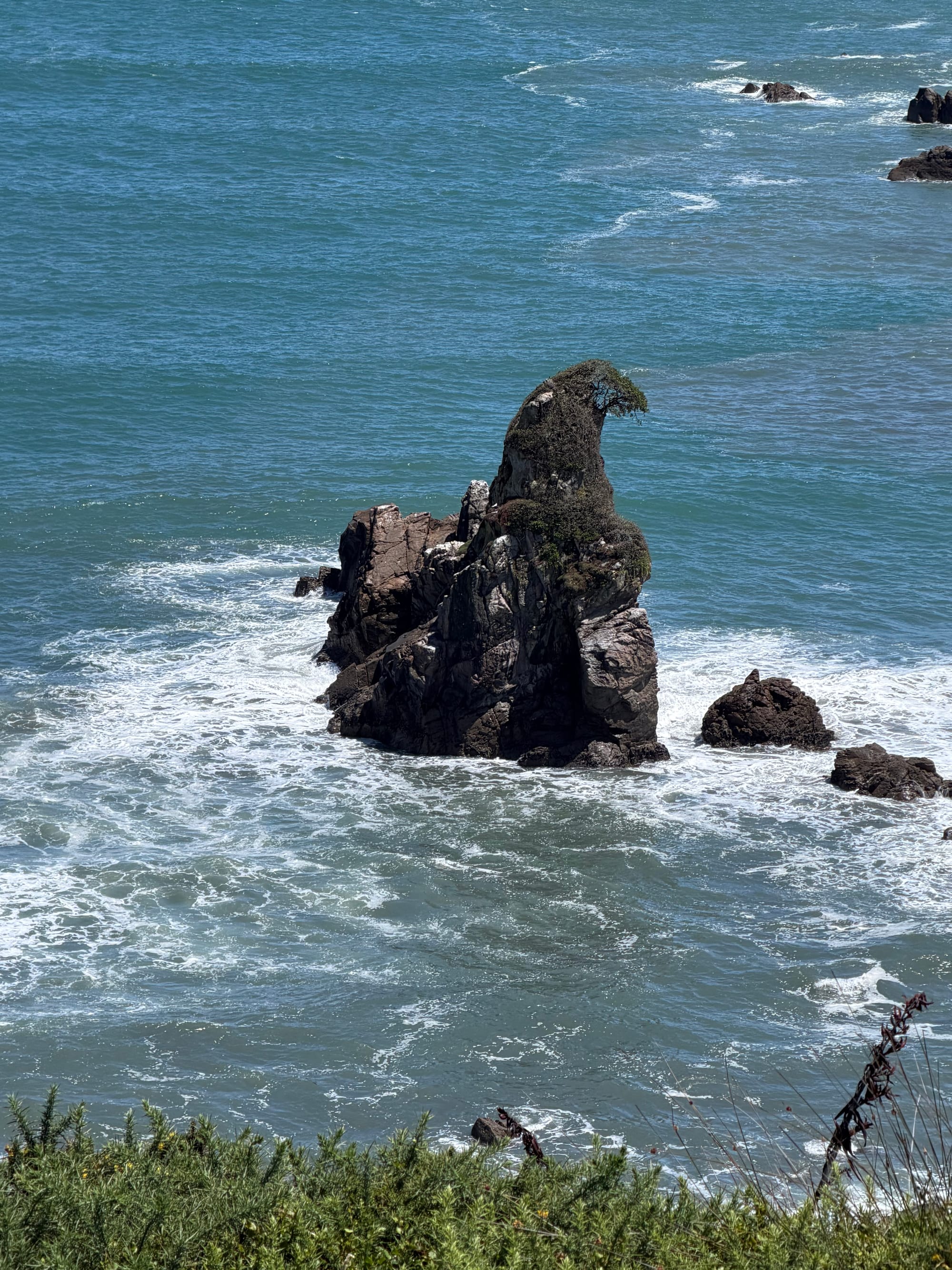
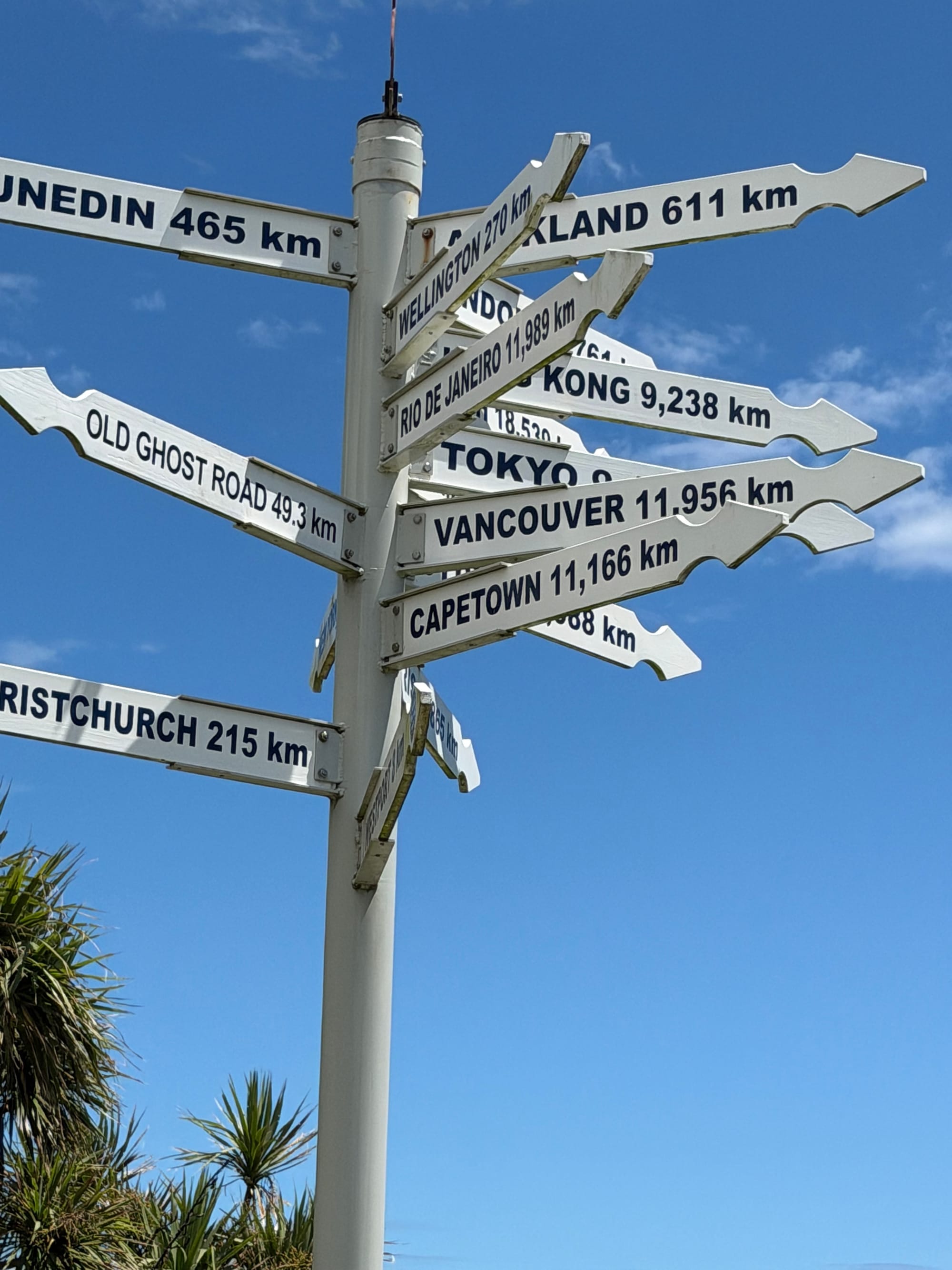
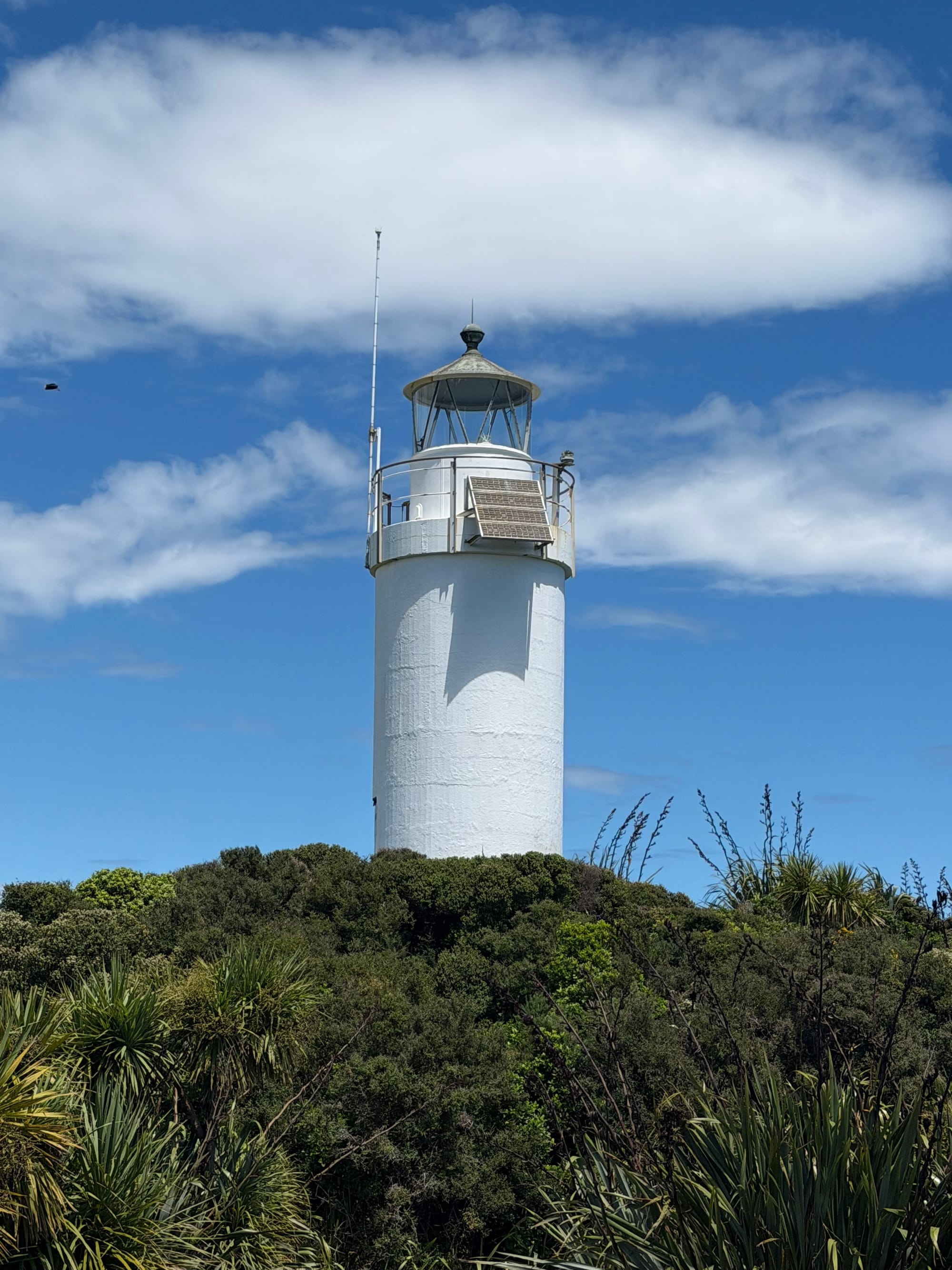
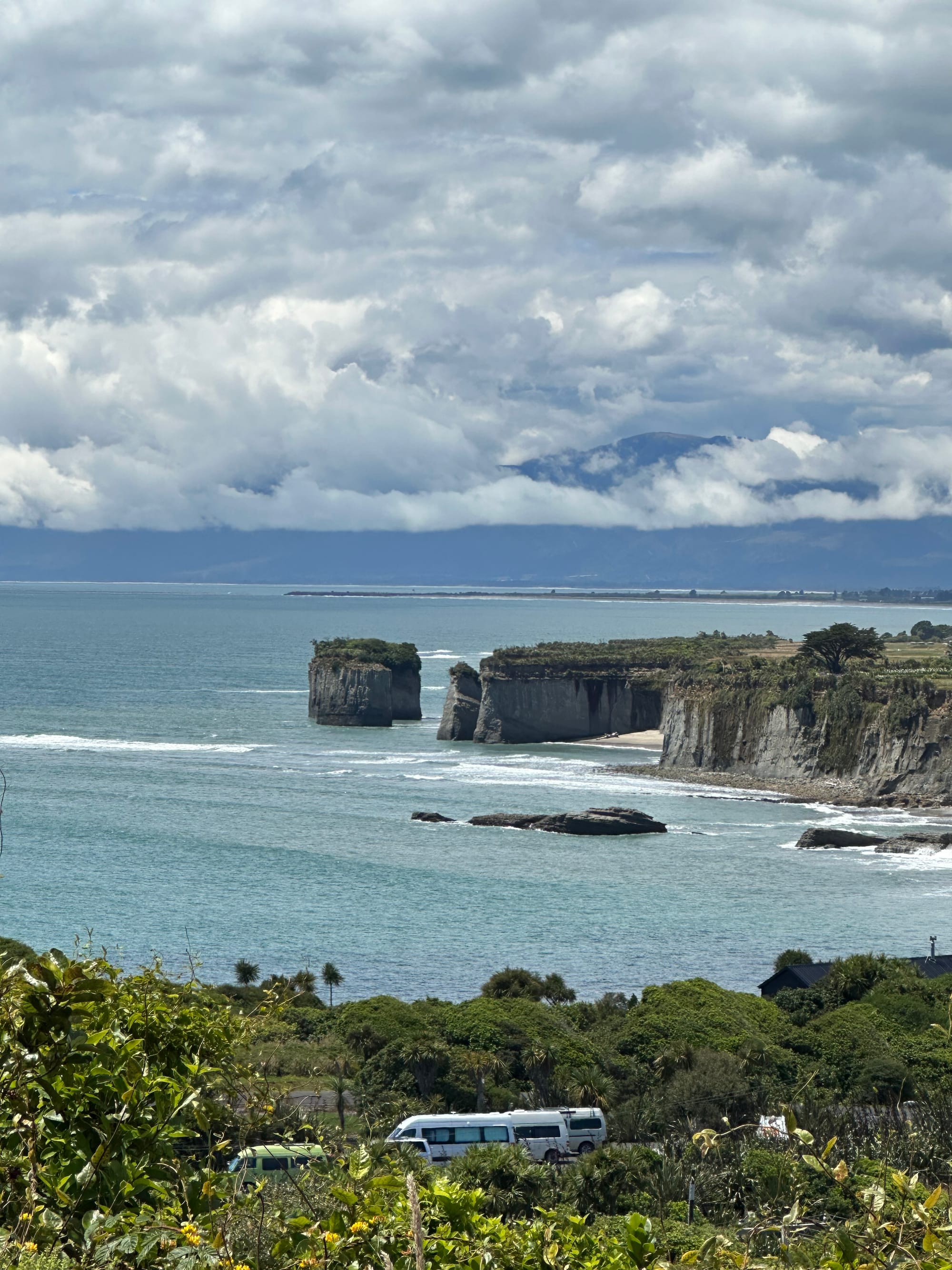
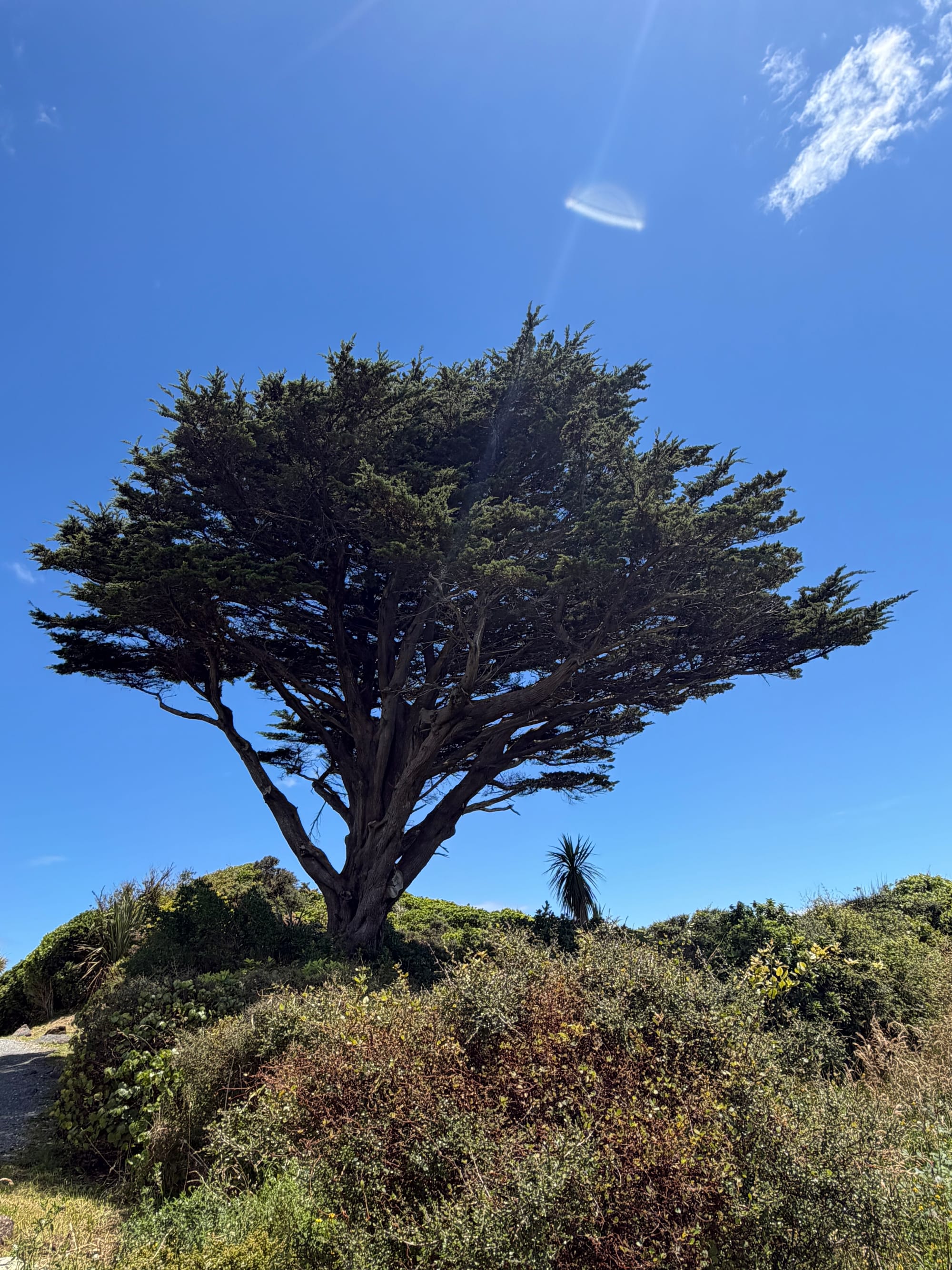
Fur Seals and Lighthouse Walk
Sunday was another beautiful day and we made an early(ish) start to go the Hokitika Gorge. Another great drive down the coast south of Greymouth to Hokitika, then inland to the gorge. There is one constant with road design and construction in NZ, if they need to build a bridge, it’s more than likely to be a single lane bridge if you are on any road other than the major highways. These bridges are well signposted, and the idea is that traffic in one direction has priority over traffic from the other direction. Most times it works OK, most times…..
The gorge was well worth the visit, and I’m glad we got there early. By the time we left, the parking lot was full. It’s a short loop walk that takes you through the woods and over 2 suspension bridges that cross the gorge. The water is a unique shade of emerald green. The colour is due to sediment called glacial flour caused by glaciers grinding rocks to a very fine powder. The sunlight reflects off the suspended silt and creates this beautiful colour.
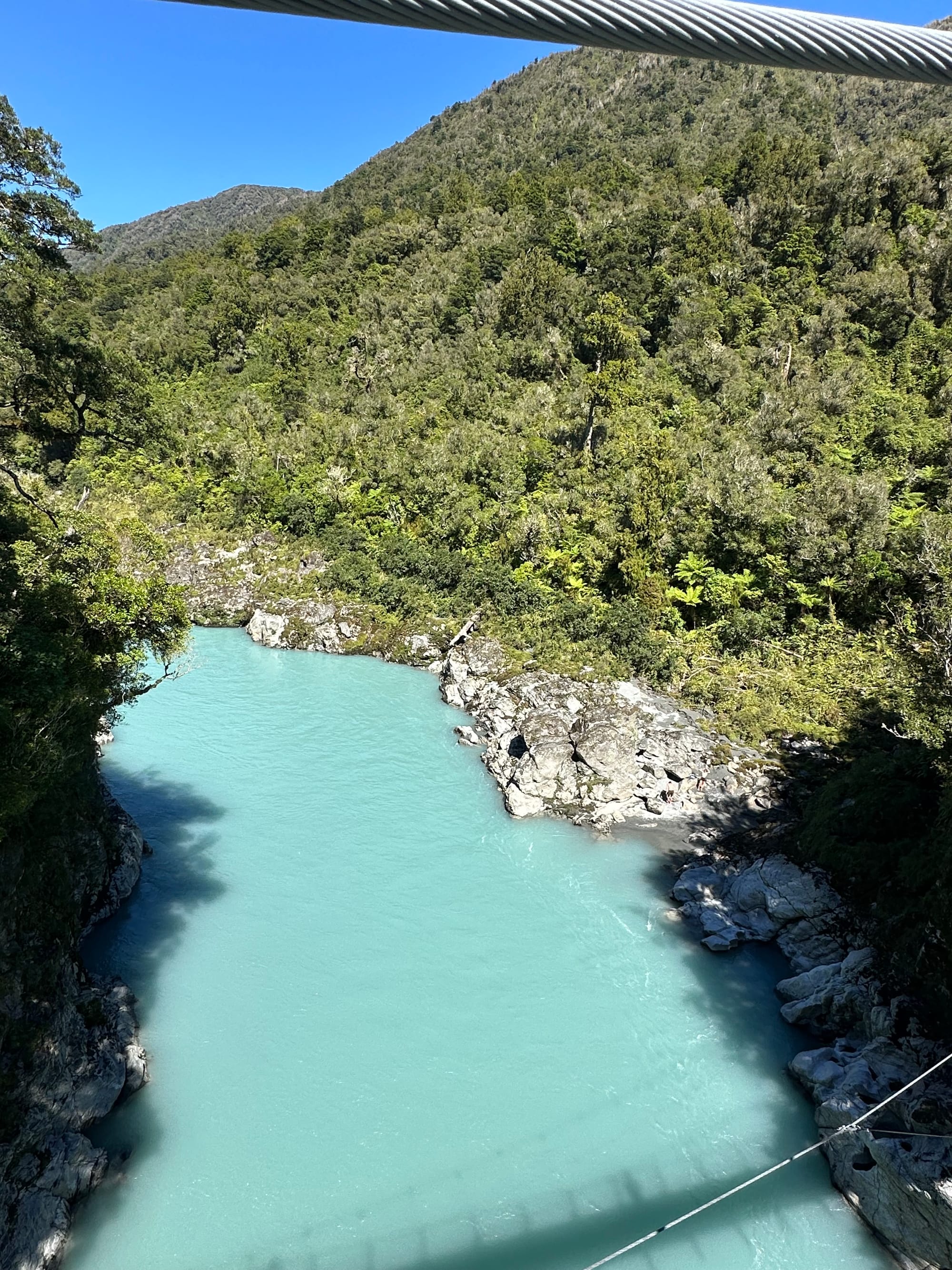
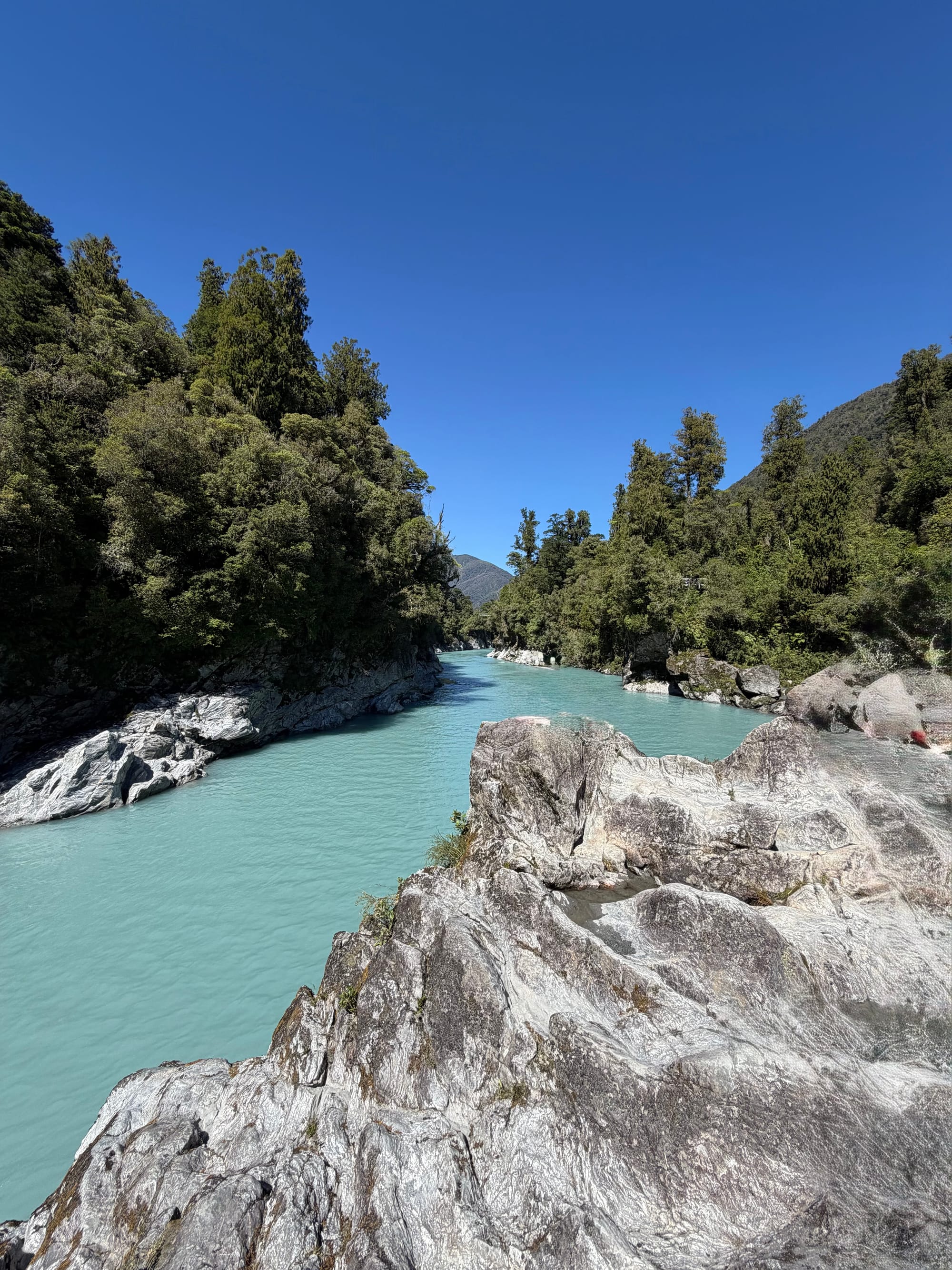
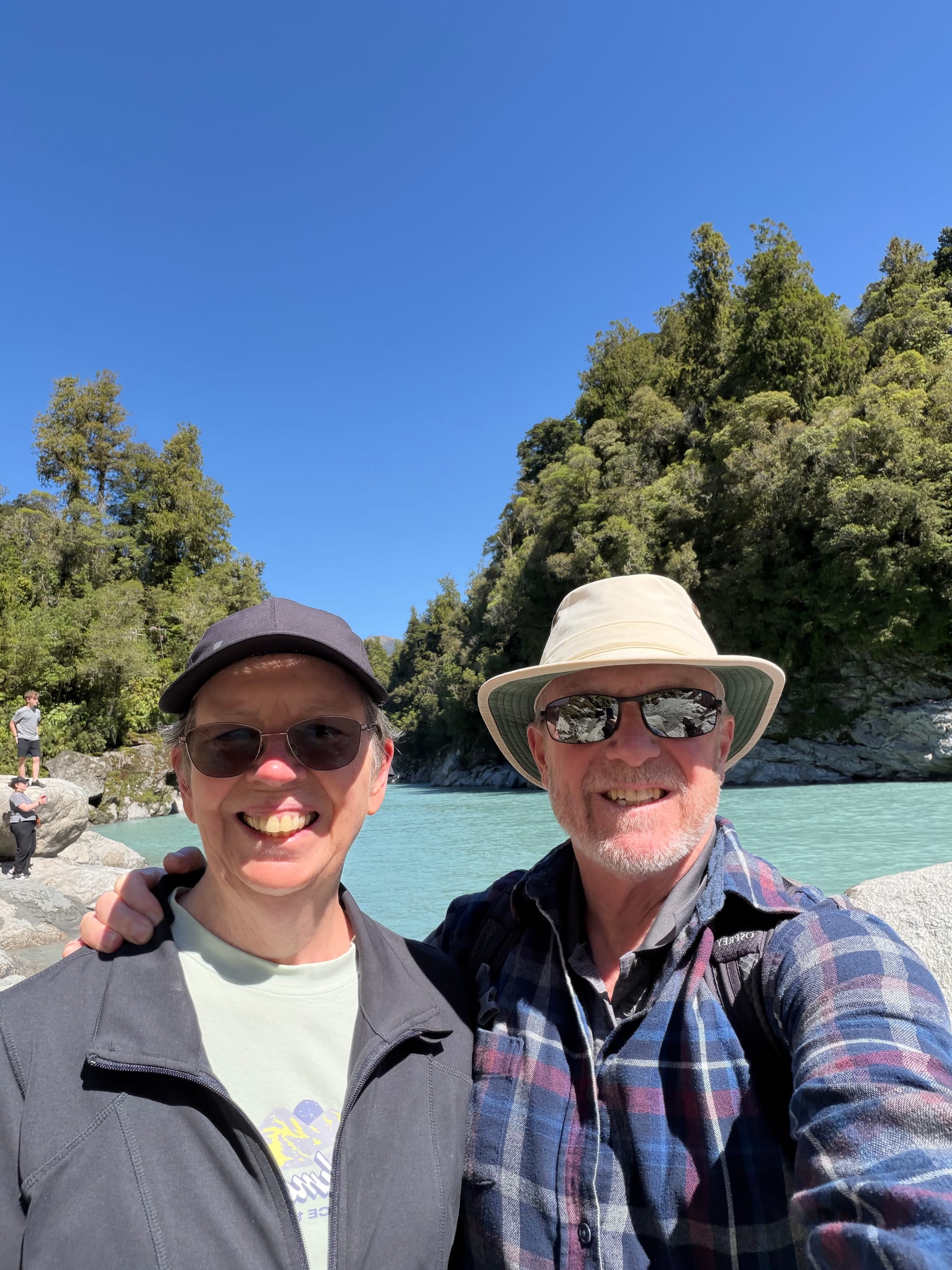
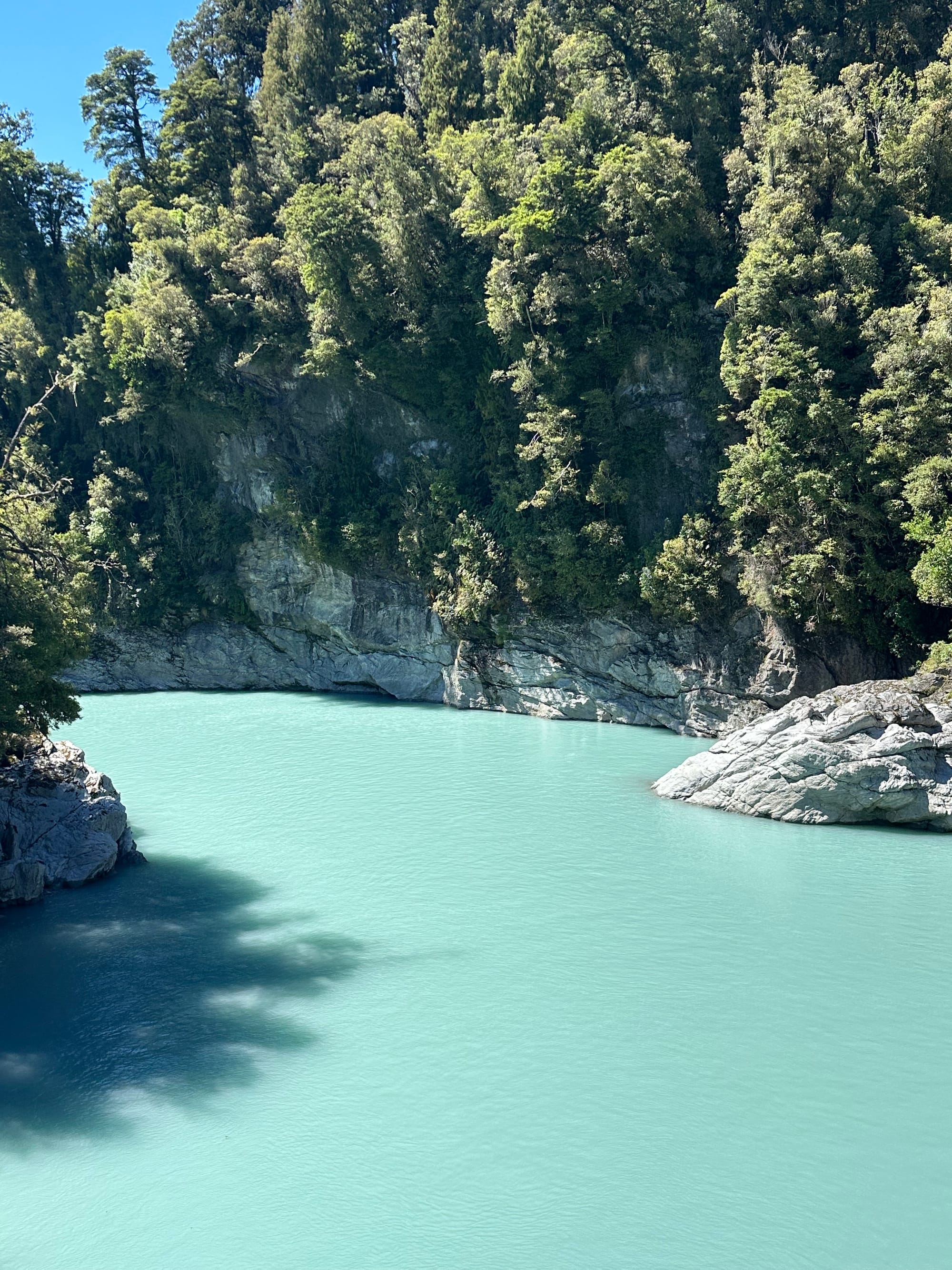
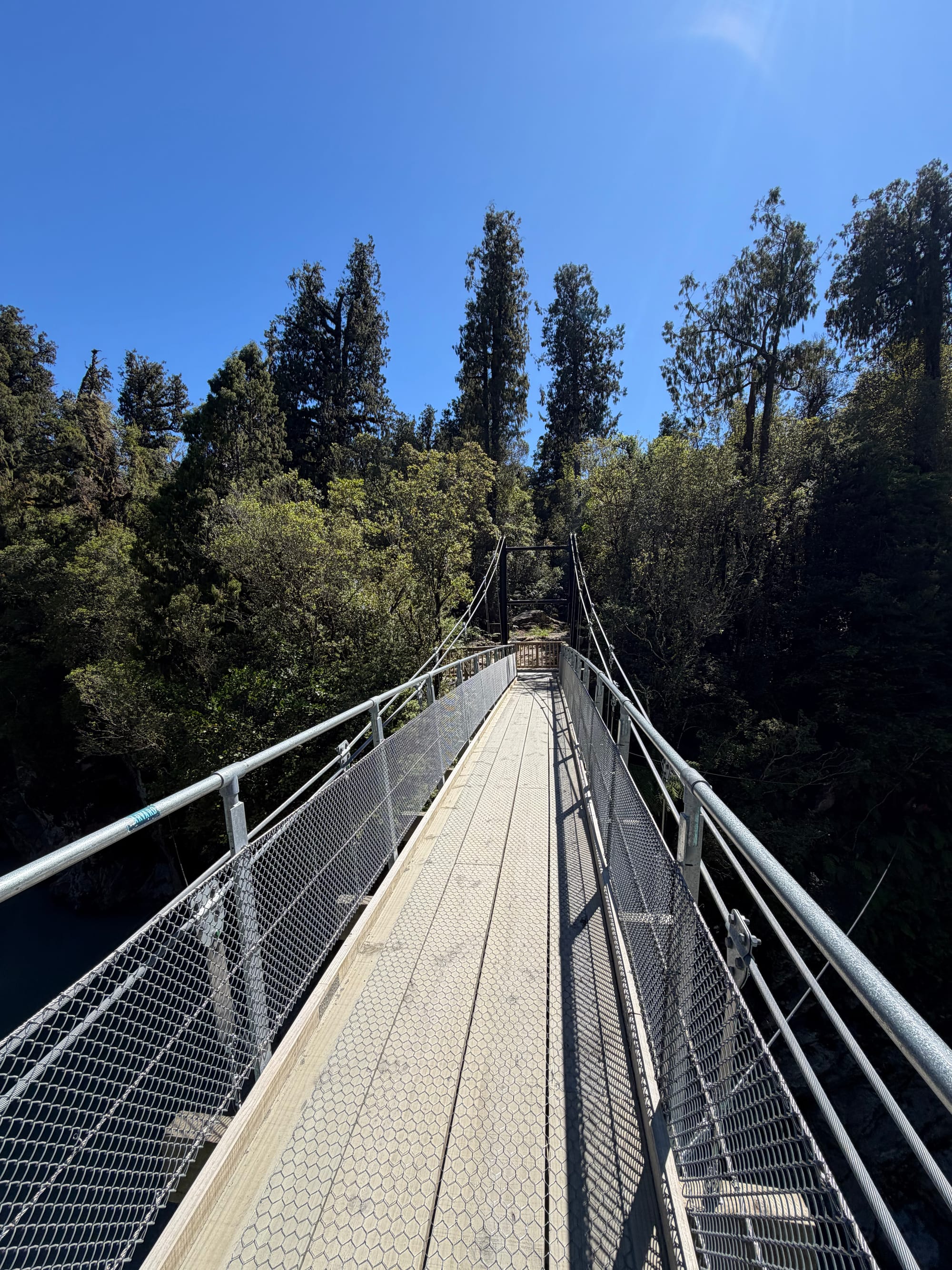
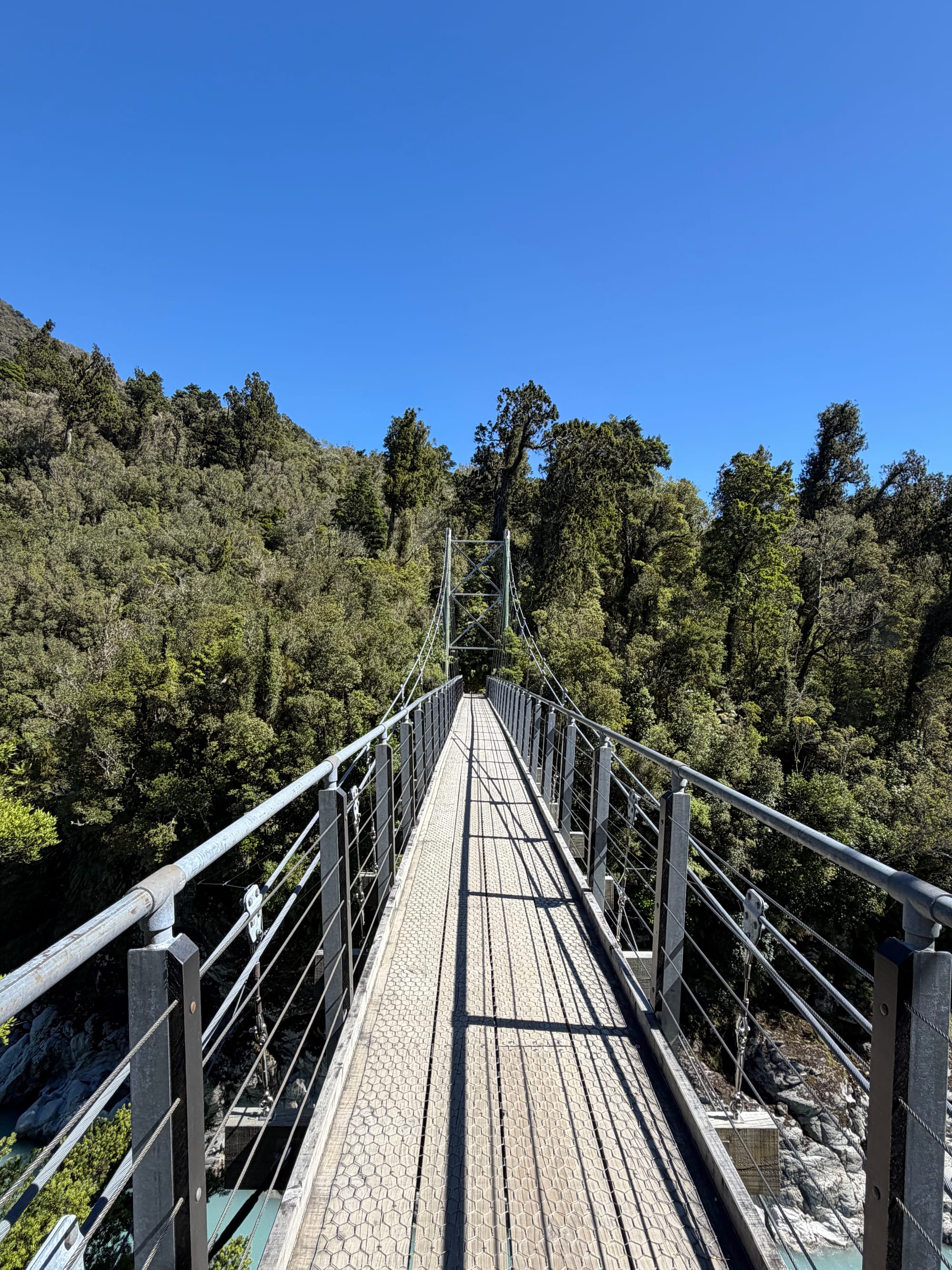
Hokitika Gorge
From the gorge, it was back to Hokitika proper to find a place on the beach to have our lunch. We’ve been packing a lunch most days when we‘ve been out and about, eating out here is a bit expensive! The beach was beautiful and we sat and watched the local surf lifesavers practice retrieving a swimmer from the tide using their inflatable, good fun! We dipped our feet in the ocean, and it was “refreshing”, not somewhere I wanted to got for a swim. We saw a few driftwood sculptures and found out later that there is an annual contest, but it was the week after we were leaving so had to make do with a few of last years entries that were still standing.
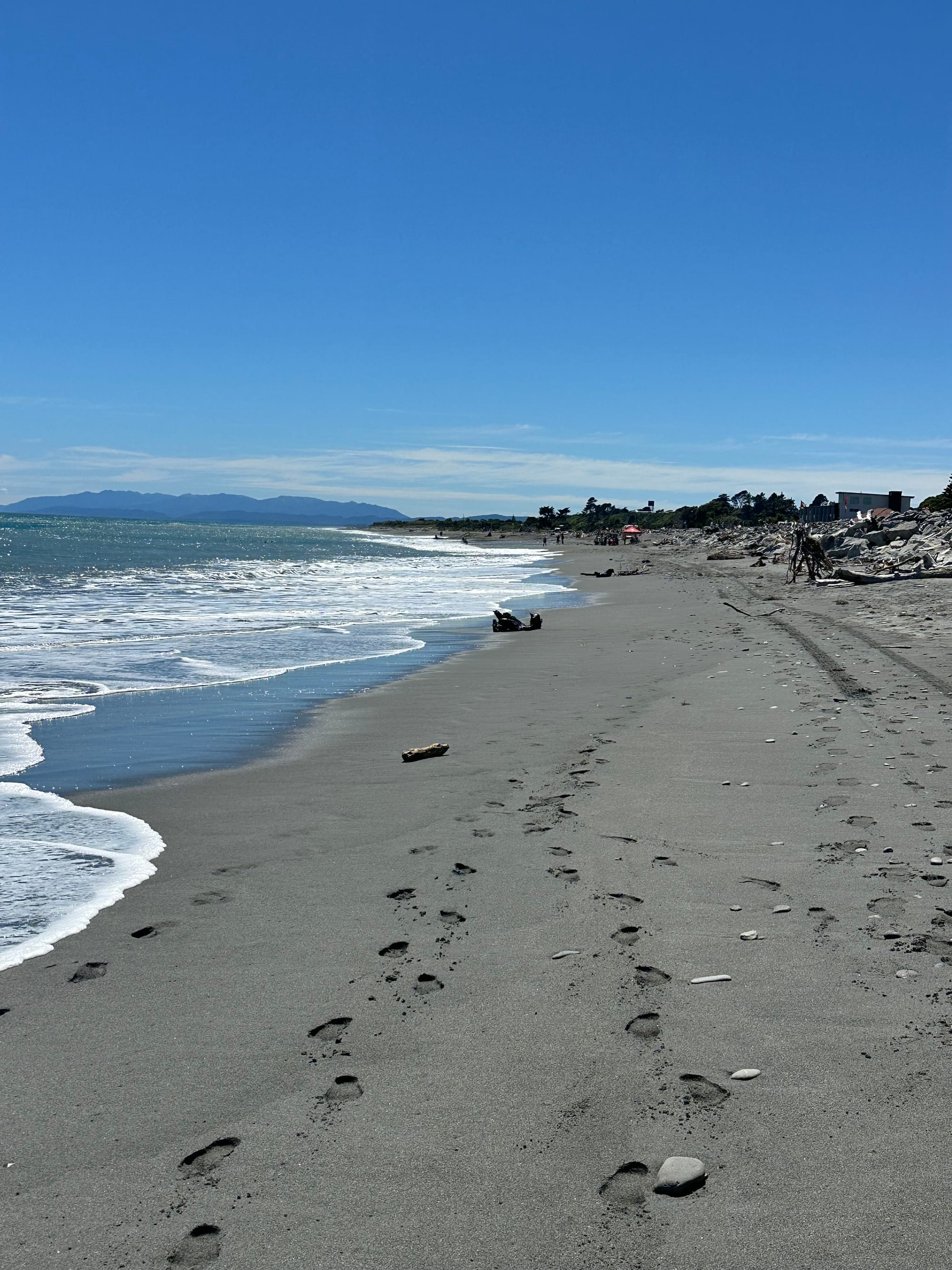
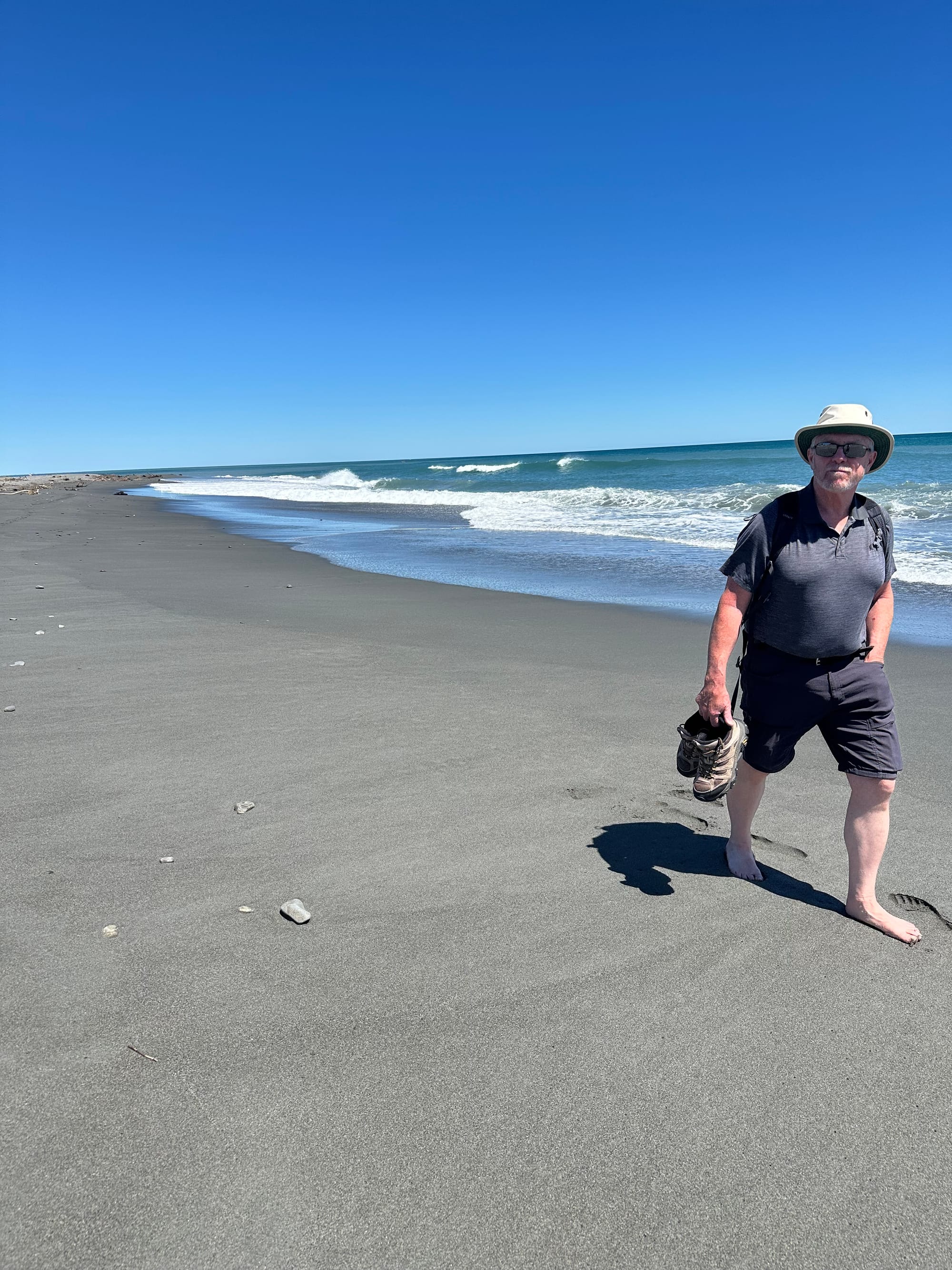
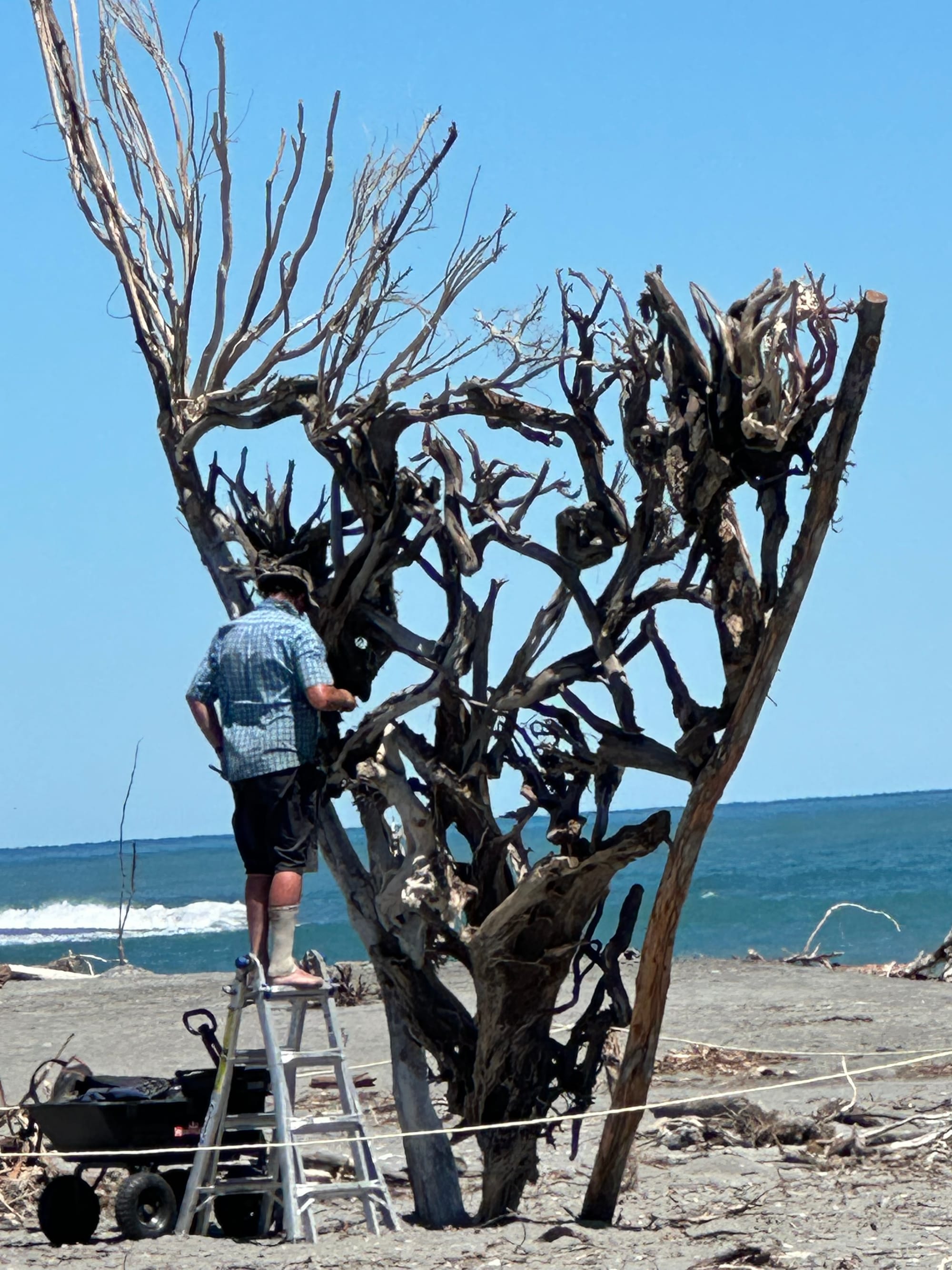
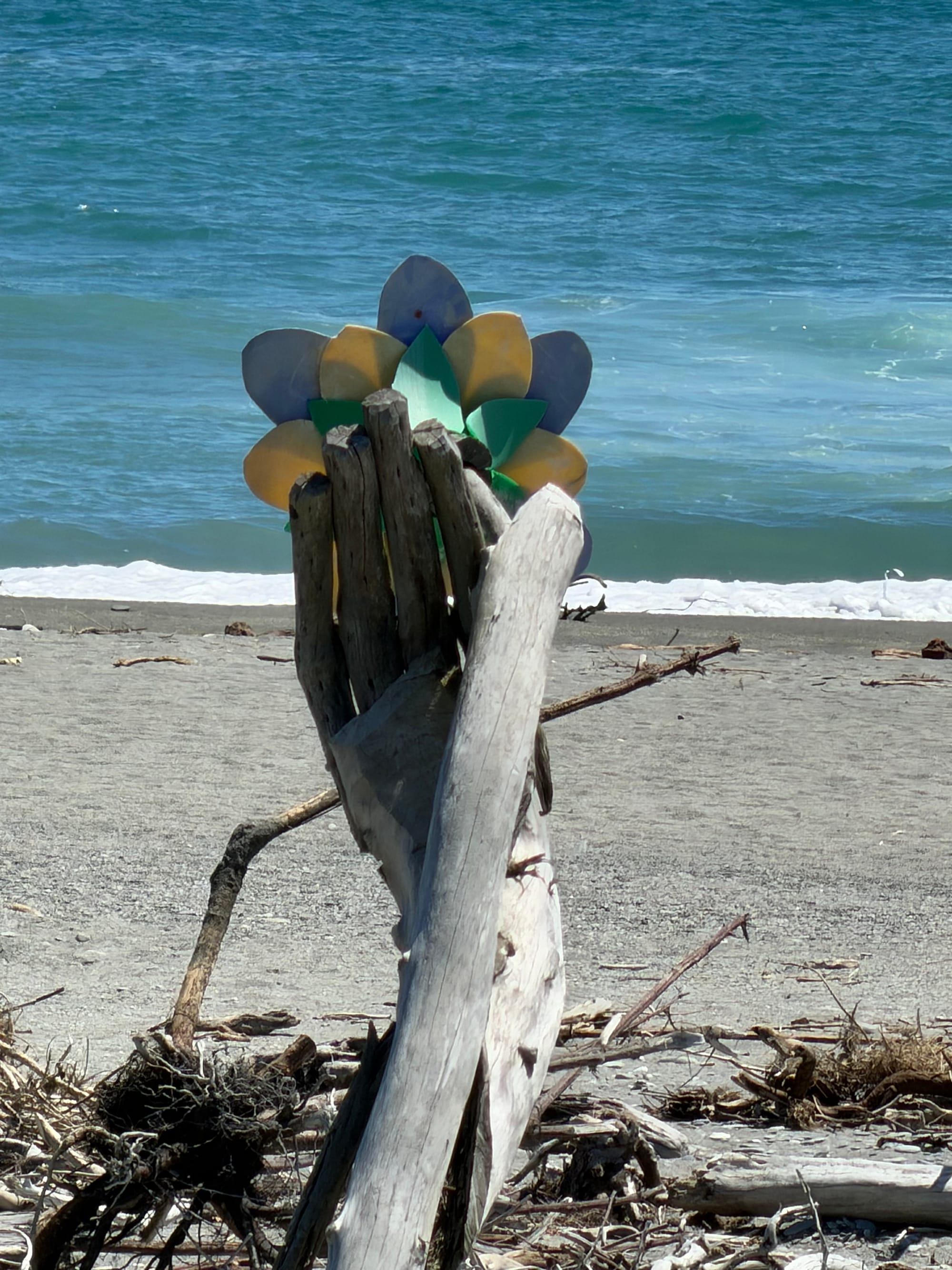
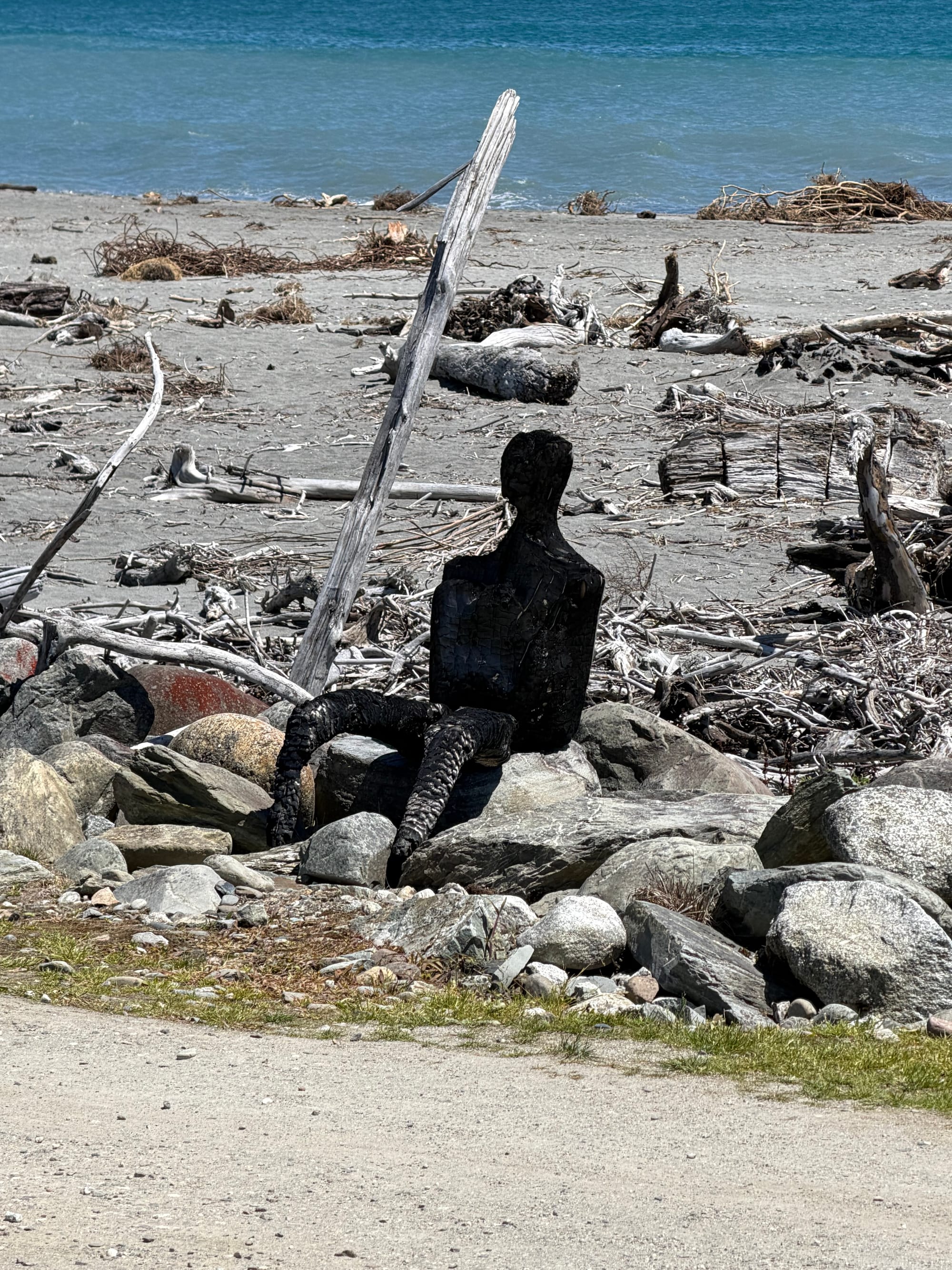
Barefoot on the beach and local beach art
Our last day in Greymouth we decided to hike around a local trail and check out another beach. We ended up hiking 2 different trails. One that went by a coal mining operation that has been shut down for about 10 years and is in caretaker mode. There is an interested party that wants to re-open the mines as it is high grade coal, low ash and best for steel making. We are still dependant in steel for our world, so if we can use the best available raw materials in the manufacturing process that minimize environmental impact we should.
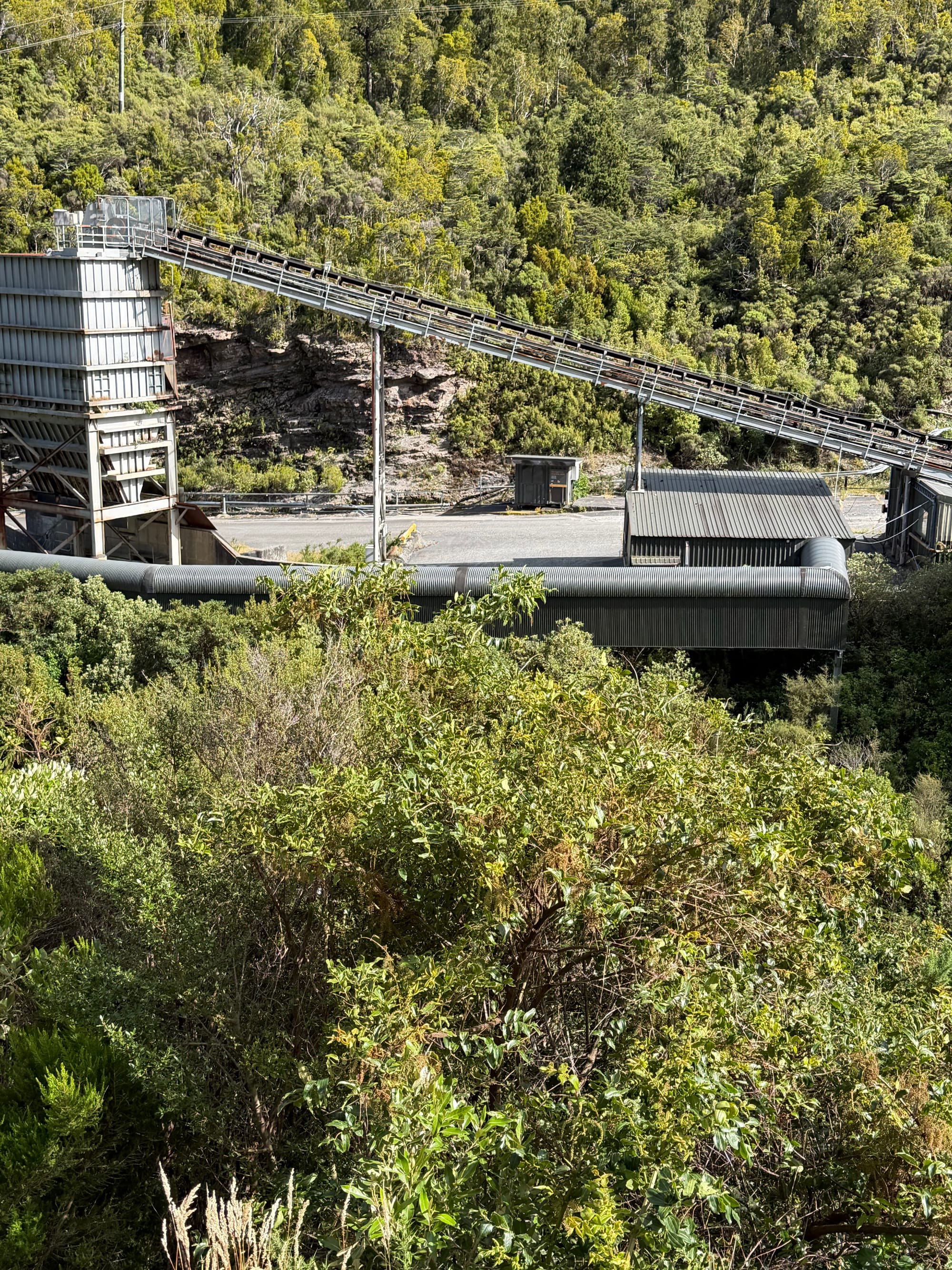
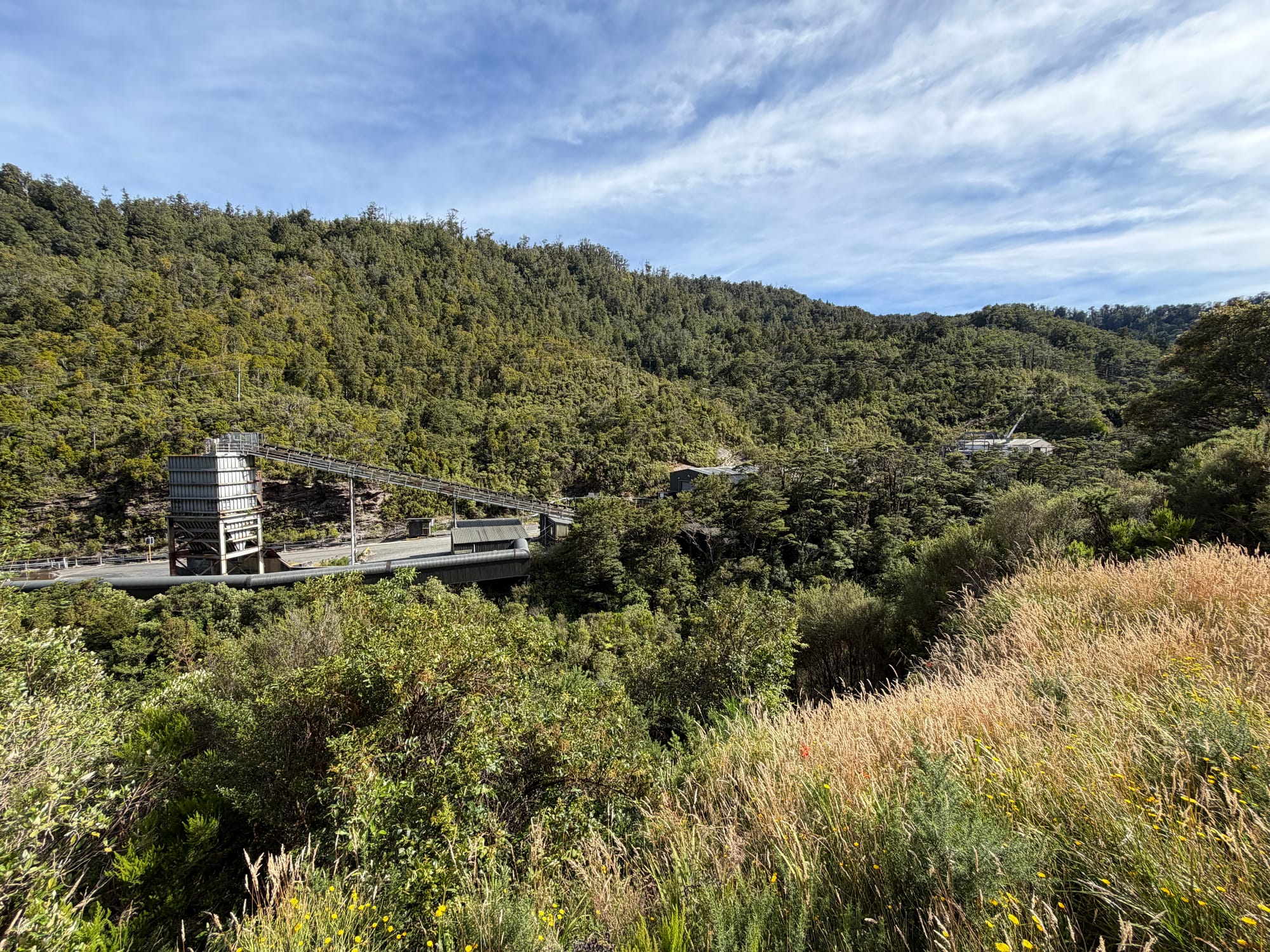
Shut-Down Coal Mine in Runanga
Our next hike took us up Coal Creek track to the waterfall. Another great hike, only about 3 1/2 km there and back, again through the bush, up to the waterfall falls. Very peaceful and relaxing.
Coal Creek Falls
Both these short hikes were from the small town of Runanga, just a few kilometers north of Greymouth. Runanga was the site of the first government built town for coal miners and their families in New Zealand. Building started in 1902, with a small school built in 1903, then a larger school in 1906. The downturn in the coal industry and the plant closure has hit this community hard, but it‘s still there, the houses are neat, there is still a school on the same spot as the original built in 1906, and there are still a few businesses operating in the town. There‘s some interesting history to the town including murder and mayhem, sporting legends and the beginnings of the union and labour movements in NZ (Runanga and Blackball are quite close to each other).
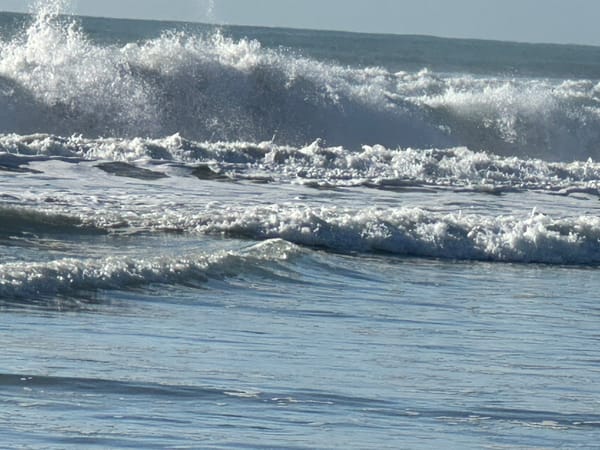
The last walk of the day started with a short trip to breakwater at the Greymouth bar, the entrance to the harbour. Like all river entrances, the bar is notorious for rough conditions but it was pretty calm when we visited with a primarily offshore wind. From the breakwater we headed north along a small coast road to the other side of Point Eliziabeth (the place we hiked on our first day in Greymouth). Took a walk along the pebble beach and listened the sound of the waves rolling the rocks around as they rolled up the beach and it reminded us of sailing around Vancouver Island. In 2007, when we circumnavigated the island as a shakedown cruise before heading off to sail to NZ, we anchored for a couple of nights at the very top of the island in a small bay called Bull Harbour. On the ocean side of the bay was a place known as pebble beach where the waves rolled the rocks up and down as the came on shore. The sound was extraordinarily restful for some reason. We got the same feeling almost 19 years later on this beach in Greymouth.
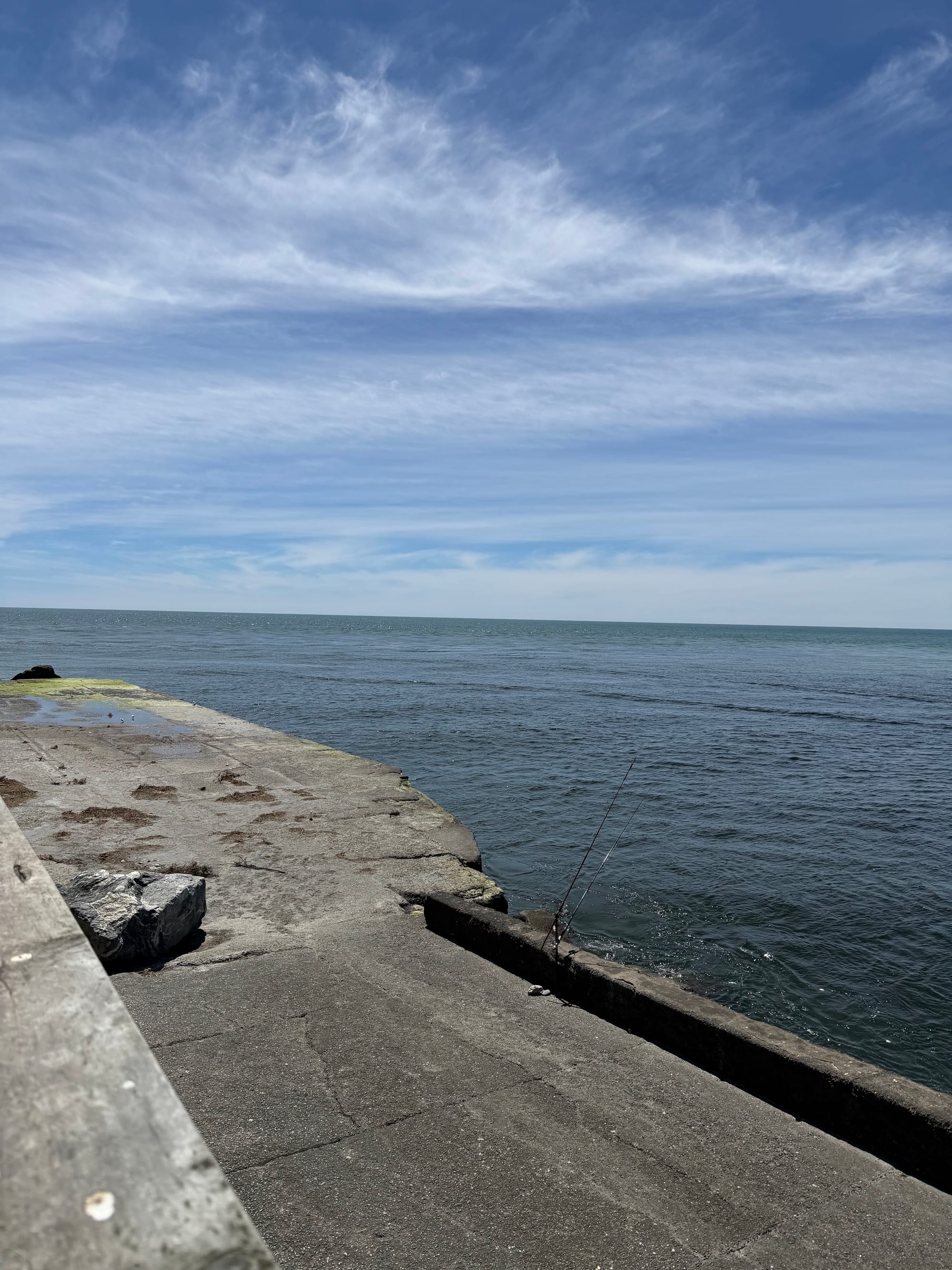
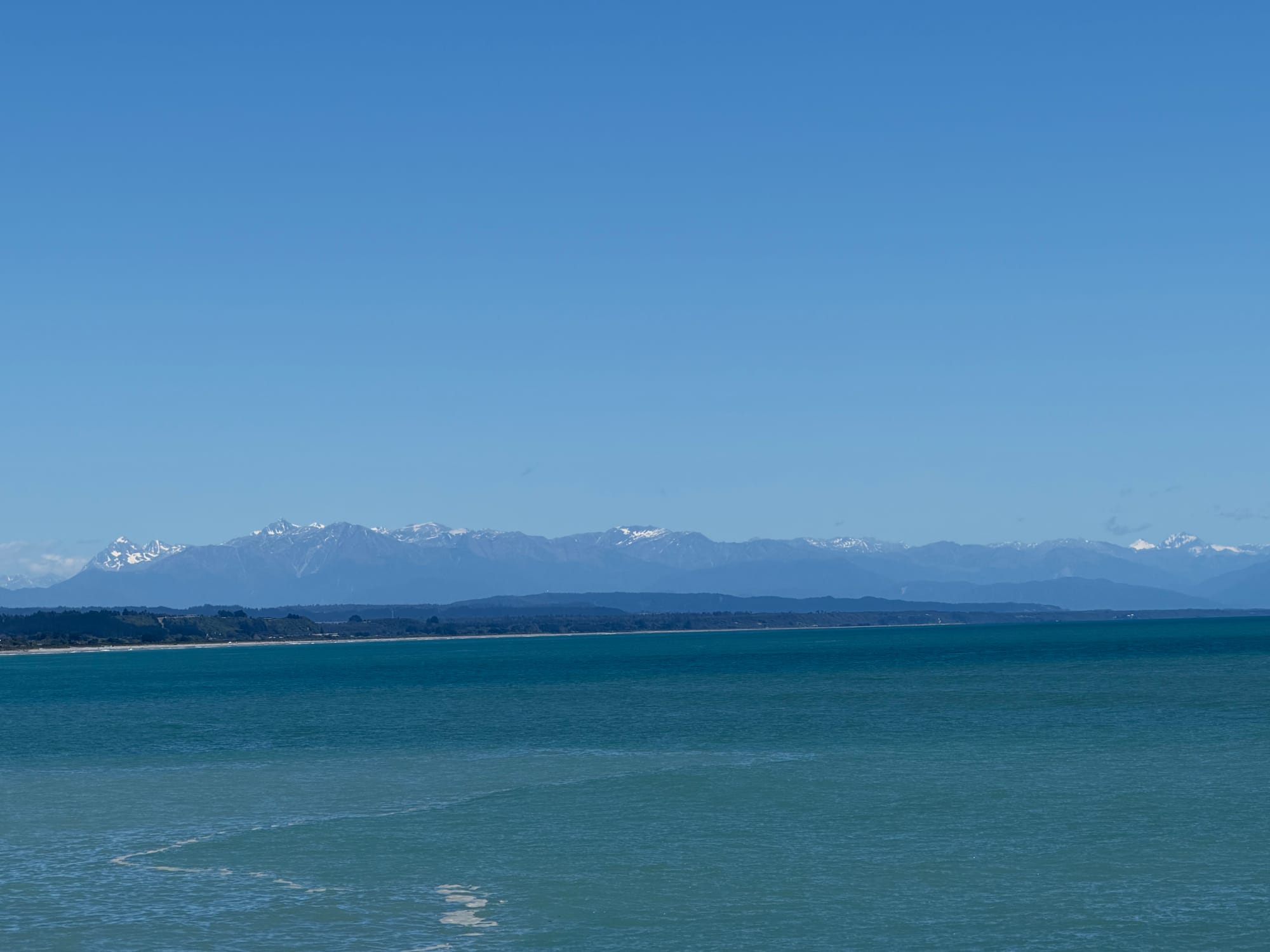
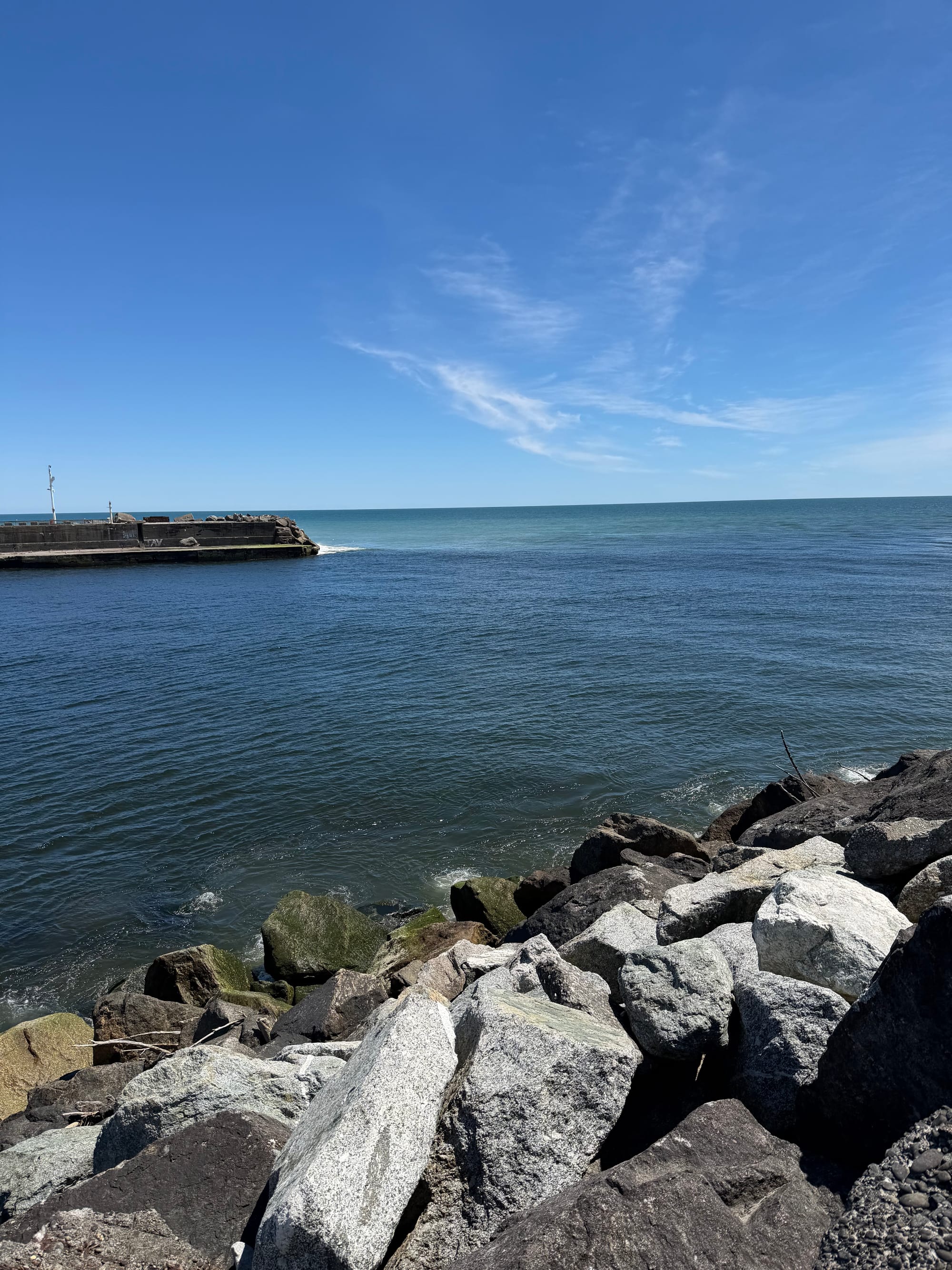
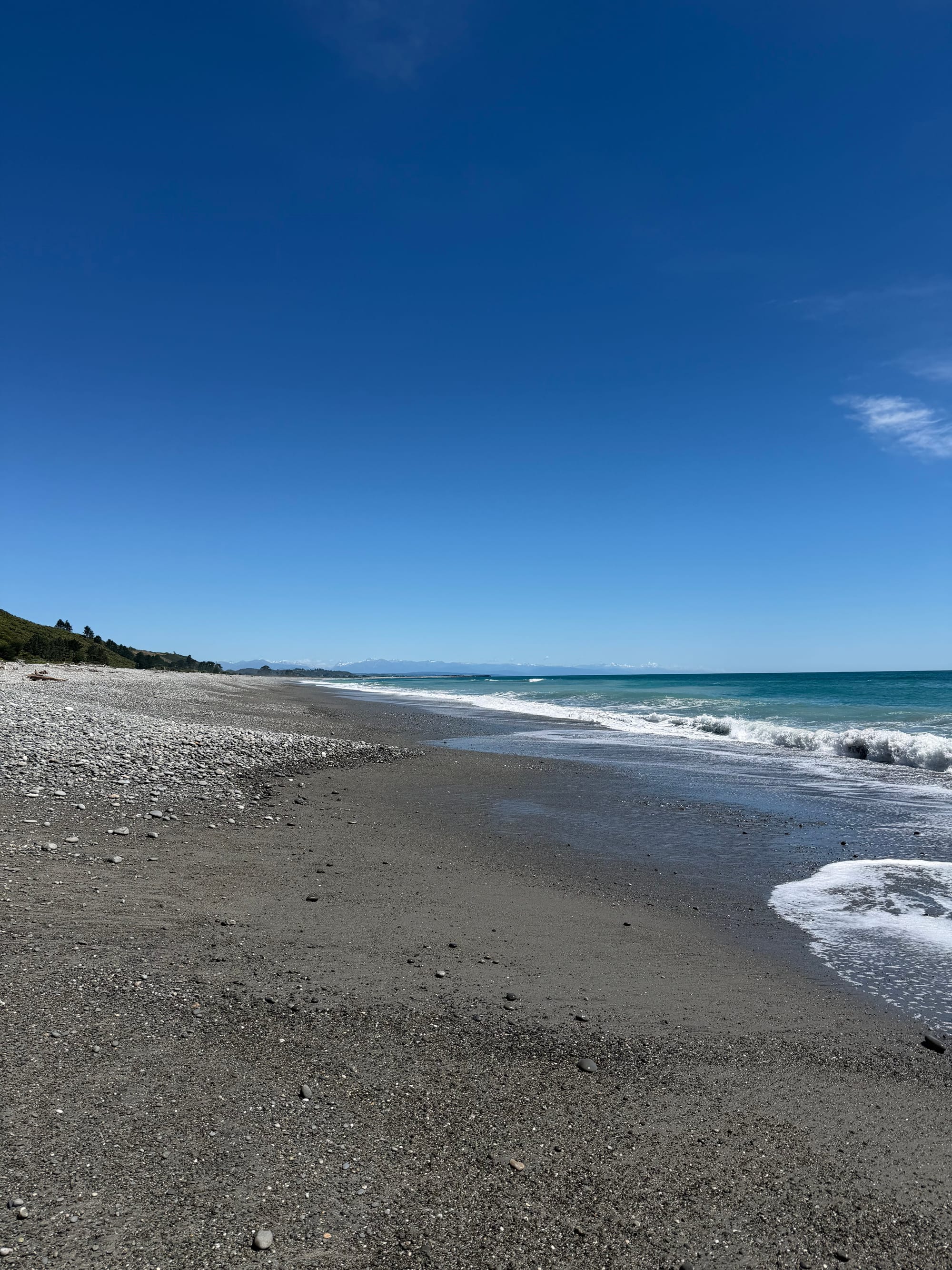
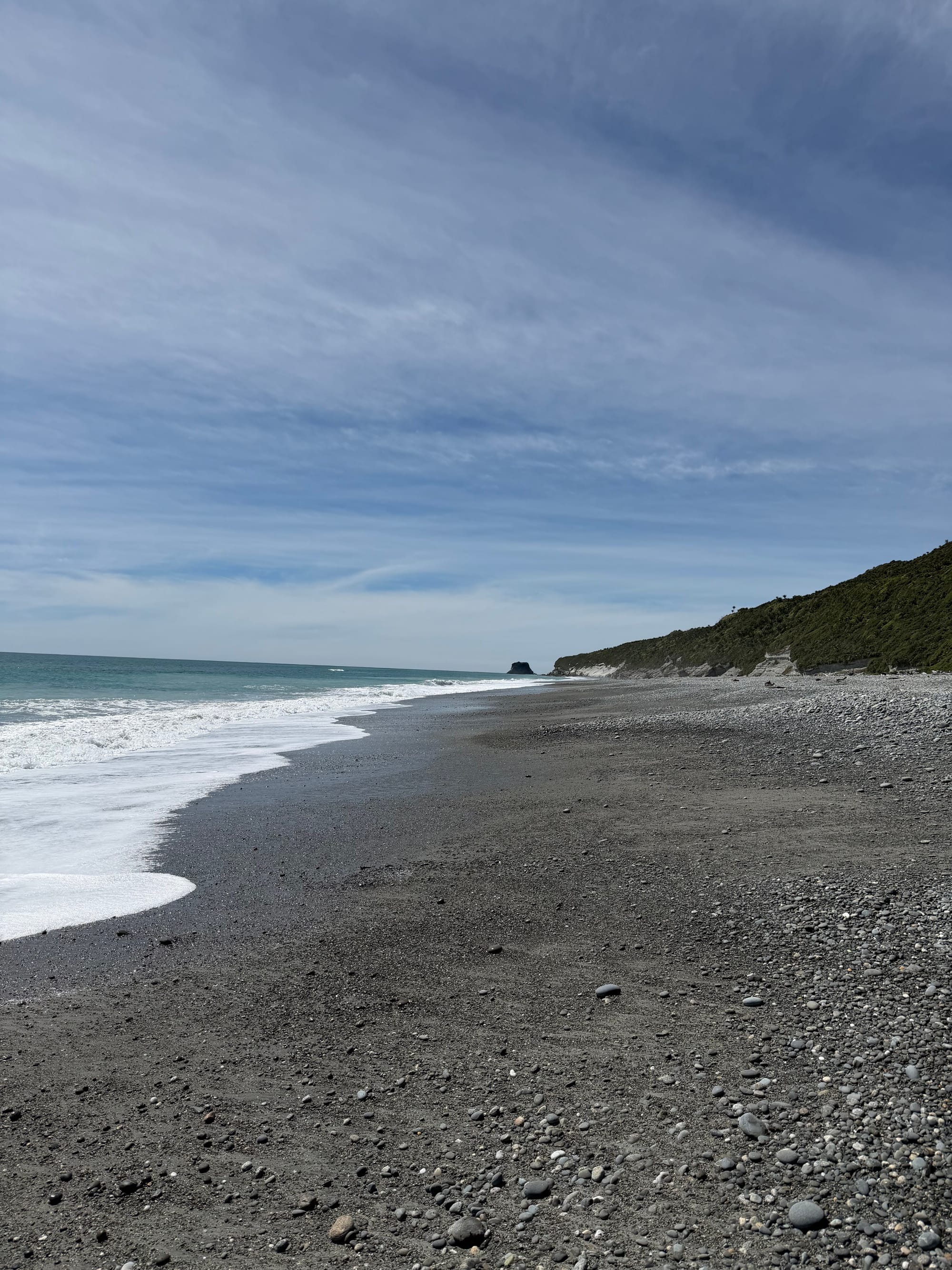
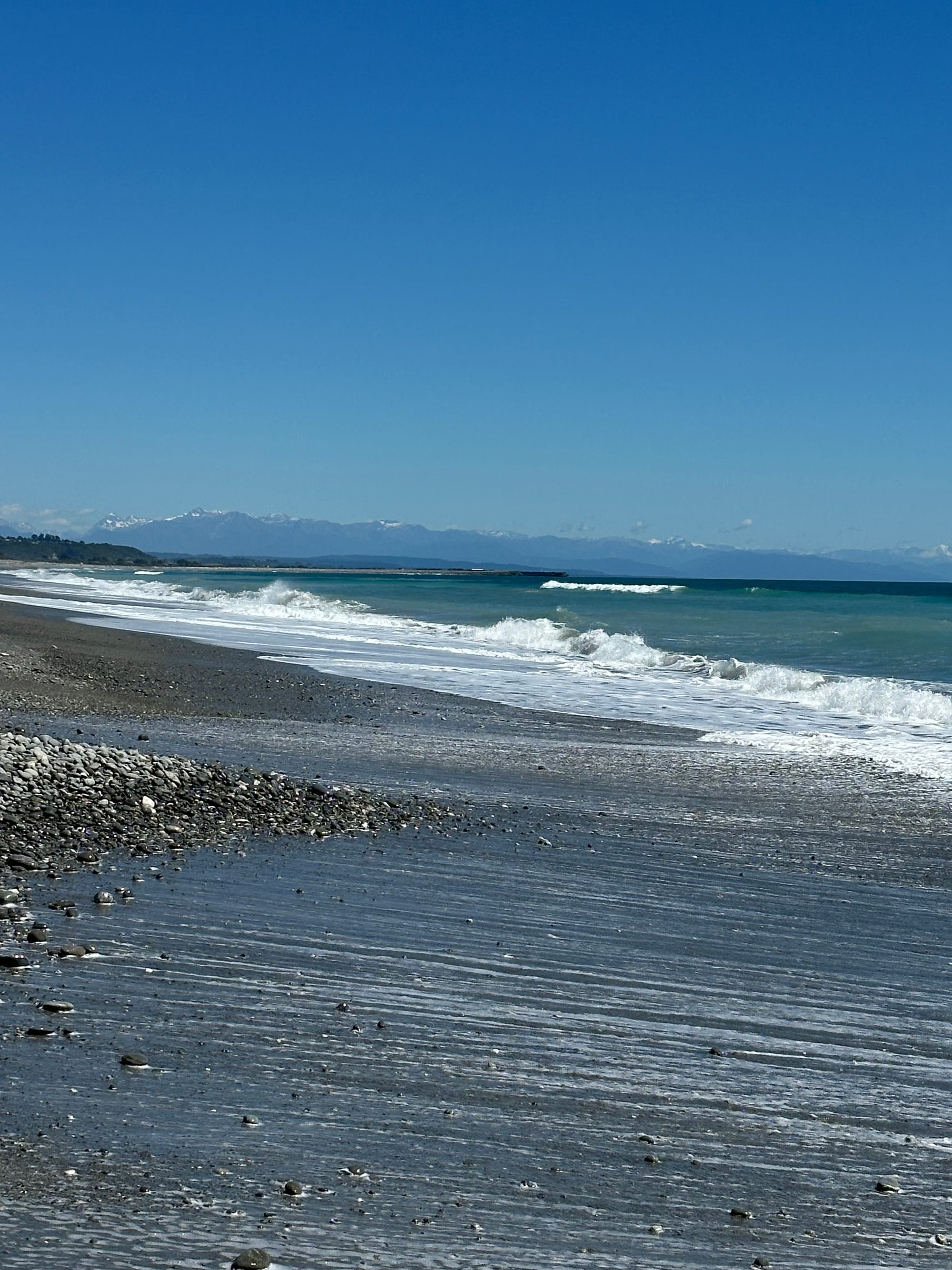
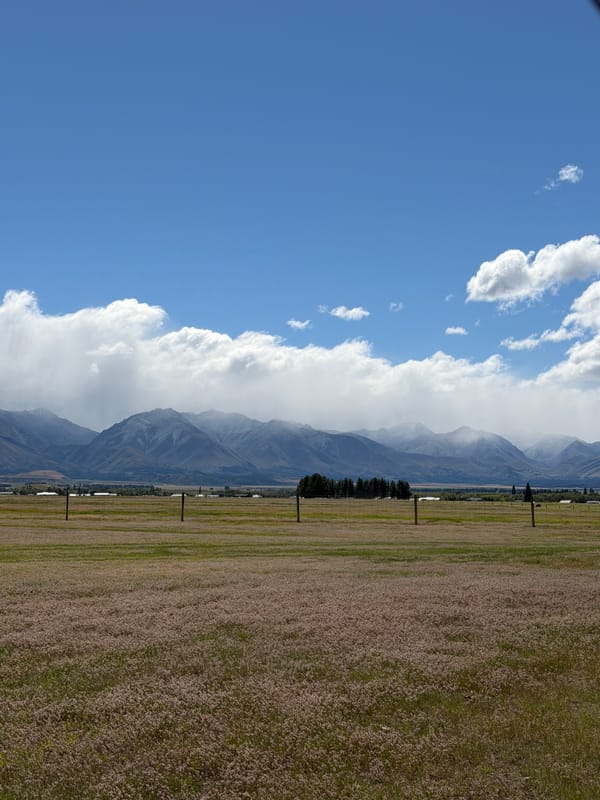
Mountains in the Distance, Beaches and the Greymouth Bar